
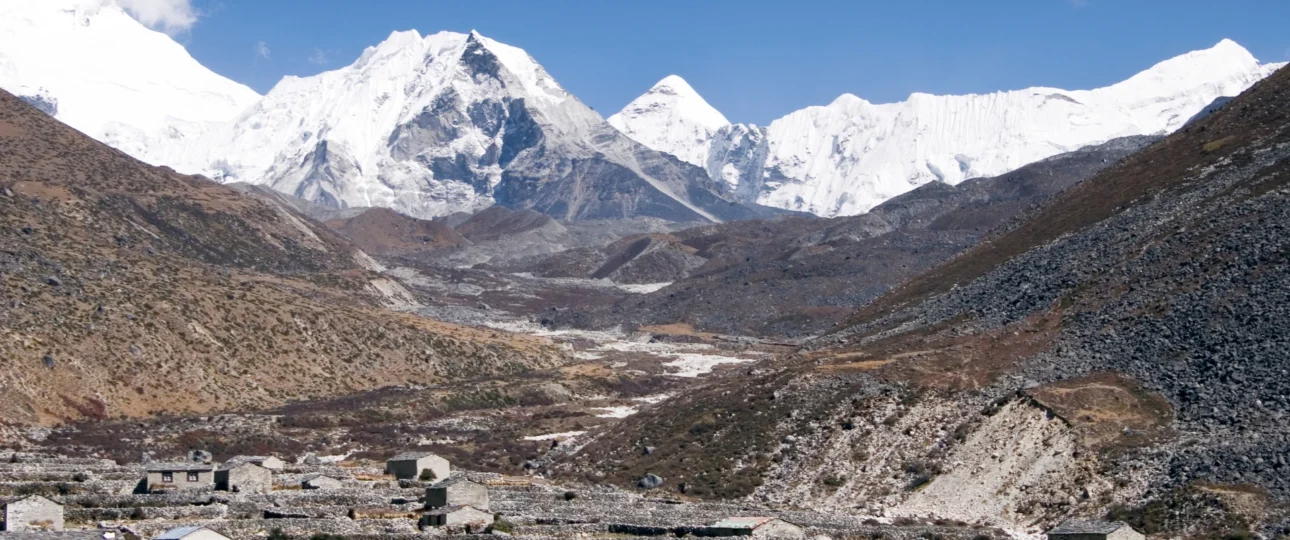
The Island Peak Route is one of Nepal’s most rewarding Himalayan journeys, leading climbers through the legendary Everest region, Sherpa villages, and breathtaking high-altitude landscapes before reaching the 6,189-meter summit of Island Peak. This iconic route combines classic trekking, cultural experiences, and an unforgettable peak climbing adventure.
Island Peak is far more than a high-altitude trek. It combines the classic Everest trekking experience with glacier travel, fixed-rope climbing, and basic mountaineering techniques, making it an ideal choice for trekkers who want to transition into alpine climbing. Although it is considered a beginner-friendly Himalayan peak, reaching the summit still requires good physical fitness, proper acclimatization, and the ability to navigate snow, ice, and exposed terrain.
The mountain is locally known as Imja Tse, meaning the peak of the Imja Valley. The name Island Peak was given by members of the 1953 British Mount Everest Expedition, who thought the mountain resembled an island rising from a sea of ice when viewed from Dingboche. Although the official name changed to Imja Tse in 1983, climbers and expedition operators around the world still widely recognize the original name.
In this guide, you’ll learn everything you need to know about Island Peak’s altitude, the complete climbing route from Lukla to the summit, key landmarks along the trail, altitude gain, acclimatization strategy, summit day timeline, technical challenges, and practical tips to improve your chances of reaching the top safely and successfully.
Quick Island Peak Climbing Route Overview

| Section | Details |
| Starting point | Kathmandu, Nepal |
| Trek starting point | Lukla |
| Region | Everest region |
| Main valley | Khumbu Valley |
| Final village | Chhukung |
| Base camp | Island Peak Base Camp (5,087 m) |
| Summit elevation | 6,189 m |
| Route style | Trekking + technical climbing |
| Duration | 18–20 days |
Island Peak Route Map and Overview
It starts in Kathmandu with a flight to Lukla, then it’s on foot from there through Phakding, Namche Bazaar, Tengboche, Dingboche, and finally Chhukung, gaining altitude gradually so your body has time to catch up.
Chhukung is where the trek ends and the climb begins; from there, you head up to Island Peak Base Camp, then High Camp, and then make the summit push in the dark hours before dawn. It’s a slow build from walking trails to glaciers and fixed ropes, and that gradual pace is really what keeps the climb safe.
Kathmandu → Lukla → Phakding → Namche Bazaar → Tengboche → Dingboche → Chhukung → Island Peak Base Camp → High Camp → Island Peak Summit
Kathmandu to Lukla: Beginning of the Island Peak Journey
This is where the expedition officially kicks off. Before you head into the mountains, there’s a round of preparation in Kathmandu: permits get checked, gear gets inspected, and guides run through the itinerary and what to expect. Then comes the flight to Lukla, which is an experience in itself, and from there the trek properly begins.
Kathmandu preparation
- Attend a comprehensive expedition briefing covering the itinerary, safety protocols, and summit strategy.
- Complete a thorough equipment inspection to ensure all trekking and climbing gear is expedition-ready.
- Verify all permits and travel documents, including climbing and national park permits.
- Meet your professional climbing guides and support team for a final pre-departure briefing.
- Review altitude awareness, emergency procedures, and weather conditions before entering the mountains.
Flight to Lukla
- Take one of the world’s most spectacular mountain flights from Kathmandu to Lukla.
- Enjoy panoramic aerial views of snow-capped Himalayan peaks, deep valleys, and winding rivers.
- Land at Lukla Airport (2,860 m), the gateway to the Everest and Island Peak region.
- Begin your trek on the legendary Everest trail, surrounded by Sherpa culture and breathtaking mountain scenery.
Why it matters: Lukla is the primary gateway for almost all Everest region treks and climbing expeditions, making it the true starting point of the Island Peak journey.
Lukla to Namche Bazaar Route
This is the first real trekking stretch. The trail follows the Dudh Koshi River through Sherpa villages and pine forest, over a handful of suspension bridges, and up into Sagarmatha National Park. Nothing about it is rushed; it’s a gentle way to start adjusting to altitude and getting a feel for the culture and scenery that define this region.
Lukla
- Starting point of the Island Peak expedition and gateway to the Everest region.
- Home to the famous Tenzing–Hillary Airport (2,860 m), one of the world’s most iconic mountain airports.
- First opportunity to experience Sherpa culture and traditional Himalayan hospitality.
Phakding
- First overnight stop after departing Lukla, at roughly 2,610 m.
- Situated along the scenic Dudh Koshi River, surrounded by forests and mountain landscapes.
- Crosses several suspension bridges decorated with colorful Buddhist prayer flags.
- A gentle trekking day that lets the body begin acclimatizing to the increasing altitude.
Namche Bazaar
- The vibrant Sherpa capital and largest town in the Everest region, at 3,440 m.
- A vital acclimatization stop before trekking to higher elevations.
- Historic trading center connecting Nepal and Tibet for centuries.
- Spectacular viewpoints overlooking Everest, Lhotse, Ama Dablam, and Thamserku.
- Gateway to Sagarmatha National Park and the higher Khumbu Valley.
Namche Bazaar to Dingboche: Entering High Himalayan Terrain
Past Namche, things start to feel different. As you climb above the tree line, the terrain gets rockier, the air noticeably thinner, and the views open up even more. The trail passes through Tengboche before reaching Dingboche — this stretch matters a lot for acclimatization, since it’s setting you up for the tougher climbing ahead.
Tengboche (3,860 m)
- Home to Tengboche Monastery, the largest and most important monastery in the Everest region.
- A spiritual center of Sherpa Buddhism, where trekkers often receive blessings for a safe journey.
- Offers breathtaking panoramic views of Ama Dablam, Everest, Lhotse, Nuptse, and Thamserku.
Dingboche (4,410 m)
- A picturesque high-altitude Sherpa village nestled beneath towering Himalayan peaks.
- Primary acclimatization stop to help your body adjust before climbing higher.
- Gateway to Island Peak and the Chhukung Valley, where the climbing route begins.
- Popular base for acclimatization hikes to improve altitude adaptation and increase summit success.
Dingboche to Chhukung Valley: The Island Peak Approach
Leaving Dingboche, the trail drops into Chhukung Valley, and this is where the trip starts feeling less like a trek and more like an expedition. Glacial moraines, alpine meadows, and big peaks all around Chhukung itself are the last proper village before the climb, and it’s where most groups spend a day or two sorting gear and getting their bodies ready.
Chhukung Valley (4,730 m)
- Final trekking destination before the technical climb to Island Peak.
- Main staging point for Island Peak expeditions and climbing training.
- Excellent location for acclimatization before entering the alpine zone.
- Easy access to Island Peak Base Camp via a well-established climbing trail.
Surrounding Himalayan peaks
- Island Peak 6,189 m
- Lhotse 8,516 m
- Ama Dablam 6,812 m
- Nuptse: 7,861 m
Chhukung to Island Peak Base Camp
From Chhukung, the ground starts to change fast; grassy valley floor gives way to rocky moraine and glacial terrain as you climb toward Base Camp at 5,087 meters. Once you’re there, it’s all about final prep: checking gear one more time, running through climbing technique, and sitting through a full safety briefing before summit day.
Purpose of Island Peak Base Camp
- Rest and acclimatize before the challenging summit push.
- Organize and inspect climbing equipment for technical sections.
- Attend a comprehensive climbing and safety briefing with professional guides.
- Practice using mountaineering gear, including crampons, harnesses, and ice axes.
- Prepare physically and mentally for the early morning summit ascent.
Island Peak Base Camp to High Camp
The trekking truly comes to an end on this leg, and the climbing begins with steeper terrain, rocky slopes, and glacier crossings. Most groups push up to High Camp, around 5,600 meters, specifically to shorten the distance left for summit day and to time the final push for the calmer, more stable conditions of early morning.
Climbing route highlights
- Transition from trekking to technical mountaineering.
- Navigate rocky ridges and glacial terrain.
- Gain elevation gradually while adapting to the alpine environment.
- Receive final climbing instructions before the summit push.
Essential climbing equipment
- Crampons
- Ice axe
- Climbing harness and helmet
- Ascender and safety carabiners
- Mountaineering boots
Island Peak Summit Route
This is the part everyone signs up for. Most teams leave High Camp not long after midnight, climbing by headlamp while the snow is still firm from the overnight cold. From there it’s glacier crossings, a stretch of fixed rope up a steep ice headwall, and a narrow ridge walk to the top at 6,189 meters.
Summit day experience
- Begin the climb before dawn under the light of headlamps.
- Cross snowfields and glacier terrain using crampons and ice axes.
- Ascend fixed rope sections with the support of experienced climbing guides.
- Follow the exposed summit ridge to the top of Island Peak.
- Celebrate reaching the summit before descending safely to Base Camp.
Summit views
- Mount Everest — 8,848.86 m
- Lhotse — 8,516 m
- Makalu — 8,485 m
- Ama Dablam — 6,812 m
- Nuptse — 7,861 m
Island Peak Trekking Route Altitude Profile
Altitude is really the whole design principle behind this itinerary. The gain is spread out on purpose, with built-in rest days at Namche Bazaar and Dingboche, so your body isn’t asked to adapt faster than it reasonably can. That pacing is a big part of why summit success rates on this route are as good as they are.
| Location | Elevation |
| Kathmandu | 1,400 m |
| Lukla | 2,860 m |
| Phakding | 2,610 m |
| Namche Bazaar | 3,440 m |
| Tengboche | 3,860 m |
| Dingboche | 4,410 m |
| Chhukung | 4,730 m |
| Island Peak Base Camp | 5,087 m |
| High Camp | 5,600 m |
| Island Peak Summit | 6,189 m |
Highlights Along the Island Peak Route
There’s more to this trip than the summit itself. Sherpa villages, old monasteries, sweeping mountain views, and glaciers make the whole route as much a cultural trip through the Everest region as it is a climb.
Sherpa culture
- Experience the warm hospitality of traditional Sherpa villages.
- Visit the historic Tengboche Monastery, the spiritual heart of the Everest region.
- Discover local customs, Buddhist traditions, and mountain lifestyles.
Himalayan views
- Enjoy spectacular views of Mount Everest (8,848.86 m).
- Admire the towering south face of Lhotse (8,516 m).
- Witness the iconic pyramid of Ama Dablam (6,812 m).
Natural landscapes
- Trek through lush forests and alpine meadows.
- Cross glacial moraines and rugged mountain valleys.
- Walk beneath towering, ice-covered Himalayan peaks.
How Long Does the Island Peak Route Take?
Most itineraries run 18 to 20 days, though it depends a bit on the exact plan and how the weather cooperates. That window covers the trekking days, acclimatization stops, climbing prep, and a couple of spare days in case something needs to shift.
Factors that affect duration
- Acclimatization schedule
- Weather and mountain conditions
- Selected trekking and climbing route
- Group fitness and walking pace
- Extra contingency days for flexibility
Alternative Island Peak Routes
There’s more than one way up. Which route makes sense depends on how much time you have and how much of the wider Everest experience you want along the way.
Chhukung to Island Peak route
- Best for climbers focused on reaching the summit efficiently.
- This is a shorter, more direct approach that starts from Chhukung.
- Ideal for experienced trekkers with limited time.
Everest Base Camp + Island Peak route
- Best for trekkers seeking the complete Everest experience.
- Combines the iconic Everest Base Camp trek with Island Peak climbing.
- Includes visits to Everest Base Camp and Kala Patthar for additional acclimatization.
- A longer, more immersive Himalayan adventure.
Is the Island Peak Route Difficult?
Moderate to challenging is the best way to describe it. The trekking portion isn’t technical; it’s long days on well-established trails, but the summit push is a genuine climb, with snow, ice, and glacier travel involved.
Key challenges
- Long trekking days at high altitude.
- Significant elevation gain throughout the expedition.
- Glacier travel and fixed-rope climbing.
- A physically demanding summit push.
Prepare for the Island Peak route
Good preparation makes a real difference here. It’s not about being an elite athlete; it’s about showing up with decent endurance, some hiking under your belt, and gear you actually know how to use.
Preparation checklist
- Build cardiovascular fitness and leg strength.
- Practice hiking with a loaded backpack.
- Prepare for high-altitude trekking and acclimatization.
- Learn basic mountaineering techniques.
- Pack appropriate trekking and climbing equipment.
Experience the Island Peak Route with Local Himalayan Experts
Reaching the summit is only part of it; having a team that actually knows the mountain matters just as much. Our guides at Island Peak Climbing have climbed this region for years and handle everything from acclimatization pacing to technical rope work so you can focus on the climb instead of the logistics.
Why climb with us?
- Experienced and government-licensed climbing guides.
- Extensive local knowledge of the Island Peak route.
- Carefully planned acclimatization and safety protocols.
- High-quality climbing equipment and logistics.
- Excellent summit success and safety record.
Frequently Asked Questions
1. What is the Island Peak route?
The Island Peak route follows the classic Everest trekking trail from Kathmandu to Lukla, passing through Phakding, Namche Bazaar, Tengboche, Dingboche, and Chhukung before ascending to Island Peak Base Camp and the 6,189-meter summit.
2. Where does Island Peak climbing start?
The technical climbing section begins at Island Peak Base Camp, while the overall expedition typically starts with a flight from Kathmandu to Lukla.
3. How long is the Island Peak route?
Most Island Peak expeditions take 18–20 days, including trekking, acclimatization, climbing, and contingency days.
4. What villages are included in the Island Peak route?
The main villages are Lukla, Phakding, Namche Bazaar, Tengboche, Dingboche, and Chhukung.
5. How high is Island Peak Base Camp?
Island Peak Base Camp sits at approximately 5,087 meters (16,690 feet) above sea level.
6. Can I combine Everest Base Camp with Island Peak?
Yes. Many climbers choose an itinerary that includes Everest Base Camp and Kala Patthar before climbing Island Peak for better acclimatization and a more complete Everest region experience.
7. Is the Island Peak route difficult?
The route is considered moderate to challenging, combining high-altitude trekking with technical glacier and fixed-rope climbing near the summit.
8. What is the best route to Island Peak?
The most popular route follows Kathmandu → Lukla → Namche Bazaar → Tengboche → Dingboche → Chhukung → Island Peak Base Camp → Summit, offering excellent acclimatization and the highest chance of summit success.
9. Where is Island Peak located?
Island Peak (Imja Tse) is located in Nepal’s Khumbu (Everest) region, inside Sagarmatha National Park, close to Mount Everest and Lhotse.
10. How many days are needed for Island Peak climbing?
A standard Island Peak climbing expedition requires 18–20 days, although shorter or longer itineraries are available depending on the chosen route and acclimatization schedule.
Final Thoughts
The Island Peak route combines the world-famous Everest trekking trail with an exciting Himalayan climbing experience, making it one of Nepal’s best adventures for aspiring mountaineers.
From Sherpa villages and ancient monasteries to glacier travel and a rewarding 6,189-meter summit, the journey offers the perfect balance of culture, trekking, and technical climbing.
With proper preparation, experienced guides, and a well-planned itinerary, Island Peak is an unforgettable introduction to high-altitude mountaineering.