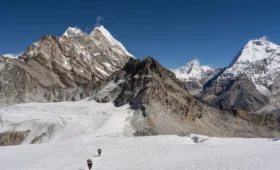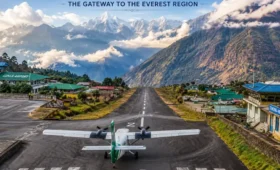
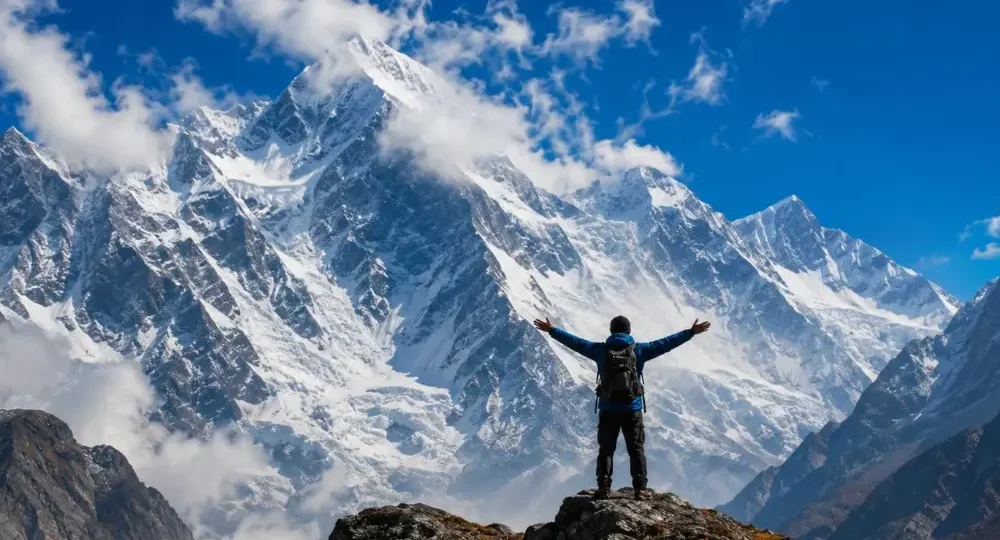
Standing at 6,189 meters (20,305 feet), Island Peak (Imja Tse) is the ultimate introduction to Himalayan mountaineering. Located in the heart of Nepal’s Everest (Khumbu) region, it combines the classic Everest trekking experience with a genuine alpine climb, making it one of Nepal’s most popular trekking peaks.
This Island Peak Climbing Guide covers everything you need to plan a safe and successful expedition, including preparation, permits, gear, acclimatization, climbing techniques, and what to expect on summit day.
According to Wikipedia, Island Peak holds an important place in Himalayan climbing history. Named by Eric Shipton’s expedition in 1953, the mountain later became an important training peak for members of the historic British Everest Expedition before their successful ascent of Mount Everest. Although authorities officially renamed the mountain Imja Tse in 1983, climbers around the world still know it as Island Peak.
Although the Nepal Mountaineering Association (NMA) classifies Island Peak as a Group B trekking peak, it offers much more than a high-altitude trek. The climb includes glacier travel, crevasse crossings, fixed ropes, and a 100–150-meter snow and ice headwall with slopes ranging from 45° to 60°, giving climbers a genuine introduction to Himalayan mountaineering.

Fit beginners can successfully climb Island Peak with proper training, gradual acclimatization, and experienced guides. This guide explains everything you need to know about the route, permits, equipment, safety, and summit day preparation.
Whether you’re planning your first Himalayan summit or preparing for larger expeditions such as Lobuche East or Ama Dablam, this Island Peak Guide provides practical, up-to-date information to help you climb safely and confidently.
Island Peak Climbing at a Glance
| Feature | Details |
| Peak | Island Peak (Imja Tse) |
| Height | 6,189 m (20,305 ft) |
| Region | Everest (Khumbu) |
| Park | Sagarmatha National Park |
| Difficulty | Moderate–Challenging |
| Duration | 16–20 Days |
| Best Time | Spring & Autumn |
| Technical | Basic Mountaineering |
| Accommodation | Tea Houses & Tents |
| Permits | NMA, Sagarmatha & Khumbu |
| Best For | Fit Beginners & Trekkers |
| Success Rate | High with Good Preparation |
Understanding Nepal’s Famous Island Peak
Island Peak, formally known as Imja Tse, is one of Nepal’s most famous trekking peaks and a popular choice for climbers aiming to summit their first Himalayan mountain. Rising to 6,189 meters (20,305 feet) in the Everest (Khumbu) region, it occupies a unique position between trekking and technical mountaineering.
Although the Nepal Mountaineering Association (NMA) classifies it as a trekking peak, the climb includes glacier travel, crevasse crossings, fixed ropes, and a steep snow-and-ice headwall, providing climbers with a genuine alpine climbing experience.
The mountain has a rich mountaineering history. On 22 May 1953, Tenzing Norgay, Charles Evans, Alfred Gregory, Charles Wylie, and a team of Sherpas climbed Island Peak as a training expedition before the historic first ascent of Mount Everest.
Earlier that year, Eric Shipton’s expedition named the mountain “Island Peak” because it appeared like an island rising from a sea of glaciers when viewed from Dingboche. In 1983, authorities officially renamed the mountain Imja Tse after the nearby Imja Valley.
However, the original name, Island Peak, remains the most widely recognized and commonly used by climbers and trekking companies around the world.
Island Peak Location and Height
Island Peak (Imja Tse) is located in the Nepal Himalayas, within the Everest (Khumbu) region of eastern Nepal. The mountain lies in the beautiful Khumbu Valley inside Sagarmatha National Park, a UNESCO World Heritage Site renowned for its spectacular Himalayan landscapes and rich Sherpa culture.
Island Peak is situated near the traditional Sherpa village of Chhukung, which serves as the final settlement before climbers head to Base Camp. Standing at an elevation of 6,189 meters (20,305 feet) above sea level, the peak is one of Nepal’s most popular trekking peaks. Its approximate geographic coordinates are 27.92° N latitude and 86.93° E longitude.
One of the most picturesque climbing locations in the Everest region, Island Peak offers climbers stunning panoramic views of some of the most famous mountains in the world, such as Lhotse (8,516 m), Ama Dablam (6,812 m), Nuptse (7,861 m), and Baruntse (7,129 m).
Why Is Island Peak So Popular Among Climbers?
Ask around, and you’ll hear the same reasons over and over: it’s the first realistic shot most trekkers get at a 6,000+ metre summit, and it involves actual climbing gear, crampons, a harness, and an ice axe instead of just walking uphill for two weeks.
The scenery alone justifies the trip for many climbers. But the approach matters too: you’re walking through Sherpa villages, past old monasteries, and through Sagarmatha National Park before you even get to the technical part.
It’s also become the go-to “test climb” for people eyeing bigger mountains later. It teaches glacier travel, rope work, and altitude management at a fraction of the cost, time, and risk of a major expedition.
Island Peak Climbing Difficulty Level
Island Peak, however, lies in the middle of technical mountaineering and trekking. The altitude (6,189 m) and thin air do most of the work in making it difficult; the technical terrain near the top adds the rest.
You’ll cross glaciers, pick your way around crevasses, climb fixed ropes up a steep snow-and-ice wall, and cross a narrow summit ridge before you’re actually standing on top. Summit day itself runs 10–14 hours and is where most of the suffering happens; it demands stamina and a clear head more than technical skill.
You don’t need prior mountaineering experience. Most operators run a short training session at Base Camp before the summit attempt to teach you what you need. What you do need is decent cardio fitness, some experience hiking steep terrain with a pack on, and the patience to acclimatize properly instead of rushing.
For comparison, Island Peak is more challenging than the Everest Base Camp Trek because it involves technical climbing. Though generally less technical than Lobuche East Peak, it is more technical than Mera Peak.
| Climb | Difficulty | Technical Level |
| Everest Base Camp Trek | Moderate | Low |
| Island Peak | Challenging | Moderate |
| Mera Peak | Moderate | Low–Moderate |
| Lobuche East Peak | Challenging | High |
Island Peak Weather Throughout the Year
Spring and autumn are your seasons. Winter and monsoon season are both workable in ideals but rough in practice.
- Spring (March–May): Stable weather, warmer days, clear skies, and rhododendrons blooming along the trail. Spring is the busiest season, and for a valid reason.
- Autumn (September–November): After the monsoon, the air is dry and the mountain views are as clear as they can be. Trails are in excellent shape, and the weather is predictable.
- Winter (December–February): Cold, windy, snowy, and quiet, since most climbers avoid it. It’s feasible but primarily suitable for seasoned mountaineers who are aware of the challenges involved.
- Monsoon (June–August): Skip this one. The trails are wet, visibility is poor, and there is a higher risk of avalanches at higher elevations. Most operators won’t even run trips during this window.
Best Time for Island Peak Climbing
The best time for Island Peak climbing is during spring (March to May) and autumn (September to November). These seasons offer stable weather, clear skies, comfortable temperatures, and the highest chances of reaching the summit. While both are excellent, April and October are widely considered the best months because of their consistent weather and ideal climbing conditions.
Spring vs Autumn
| Feature | Spring (March–May) | Autumn (September–November) |
| Weather | Stable and warmer | Dry and stable |
| Crowds | High | High |
| Visibility | Excellent | Crystal clear |
| Temperature | Mild days, cold nights | Cool days, colder nights |
| Summit Conditions | Excellent | Excellent |
| Best For | Pleasant weather & blooming trails | Clear mountain views |
Monthly Recommendation
| Month | Recommendation |
| March | Good start of the spring season |
| April | Best Month: Stable weather and excellent climbing conditions |
| May | Excellent warm temperatures and clear skies |
| June | Not Recommended: Monsoon begins |
| July | Not Recommended: Heavy rain and poor visibility |
| August | Not Recommended: Wet trails and avalanche risk |
| September | Very good, the monsoon ends with improving weather. |
| October | Best Month: Dry weather and crystal-clear mountain views |
| November | Excellent, stable weather with fewer crowds |
| December | Fair cold with occasional snow |
| January | Difficult extreme cold and strong winds |
| February | Fair and cold, but the weather begins to improve. |
April and October are the best months for climbing Island Peak. Both offer the most stable weather, excellent visibility, comfortable climbing temperatures, and the highest summit success rates. If you prefer warmer conditions and blooming rhododendron forests, choose April. For the clearest mountain views after the monsoon, October is the best month.
Island Peak Climbing Permits
Every climber needs three permits, and in practice, your trekking company will handle all of it as part of the package; you rarely deal with the permits directly.
Required Permits
NMA Climbing Permit
The Nepal Mountaineering Association (NMA) Climbing Permit is the primary permit required to climb Island Peak. It authorizes climbers to attempt the summit and is mandatory for every expedition.
Sagarmatha National Park Entry Permit
Island Peak is located within Sagarmatha National Park, a UNESCO World Heritage Site. This permit allows visitors to enter the park while supporting the conservation of its natural environment, wildlife, and cultural heritage.
Khumbu Pasang Lhamu Rural Municipality Permit
This local permit is required for everyone visiting the Khumbu region. It helps maintain trekking trails, improve local infrastructure, and support tourism management and community development.
Required Permits for Island Peak
| Permit | Purpose |
| NMA Climbing Permit | Required to climb Island Peak |
| Sagarmatha National Park Entry Permit | Required to enter Sagarmatha National Park |
| Khumbu Pasang Lhamu Rural Municipality Permit | Required to enter the Khumbu region |
Note: Most guided Island Peak climbing packages include all required permits, so climbers usually do not need to arrange them separately.
Island Peak Summit Day: Technical Breakdown
Summit day on Island Peak typically begins between 12:00 AM and 1:30 AM. Starting early is critical to reach the summit by sunrise and descend before the afternoon winds and sun-softened snow make the glacier dangerous.
Step 1: The Rocky Scramble (Base Camp to High Camp & Above)
The climb begins with a steep ascent over rocky terrain, loose scree, and boulder sections. Depending on the itinerary, climbers may start from Island Peak Base Camp (5,100 m) or High Camp (5,600 m). This section requires careful footwork, especially in darkness, so a quality headlamp and proper pacing are essential. Climbers eventually reach the glacier entry point, commonly known as Crampon Point, at around 5,800 m, where they put on crampons and prepare for glacier travel.
Step 2: The Glacier & Crevasses
After reaching the glacier, climbers rope up with their team and begin crossing the icy terrain.
During this section, climbers:
- Navigate uneven ice surfaces and snow slopes
- Cross-crevasses using fixed ladders when required
- Walk carefully with crampons and climbing equipment
Depending on the season and route conditions, some crevasses may require aluminum ladder crossings. Experienced climbing Sherpas guide climbers through this section and provide essential instruction.
Step 3: The Headwall
This phase is the most physically demanding section. A 100–150m wall of fixed ropes leads to the summit ridge.
- Technique: You will use a Jumar (ascender) to pull yourself up the rope, combined with front-pointing your crampons into the ice.
- Gradient: Starts at 45° and steepens to nearly 60° near the top.
Step 4: The Summit Ridge
The headwall tops out onto a narrow, exposed knife-edge ridge. You will shuffle along this ridge for about 30–50 meters, with massive drops on either side, until you reach the small summit plateau.
Island Peak Altitude Profile
As you climb Island Peak, the altitude increases gradually from Kathmandu to the summit. A slow ascent with planned acclimatization days is essential to help your body adjust to the thinner air and reduce the risk of altitude sickness.
| Location | Elevation |
| Kathmandu | 1,400 m |
| Lukla | 2,860 m |
| Phakding | 2,610 m |
| Namche Bazaar | 3,440 m |
| Tengboche | 3,860 m |
| Dingboche | 4,410 m |
| Chhukung | 4,730 m |
| Island Peak Base Camp | 5,100 m |
| High Camp (Optional) | 5,600 m |
| Island Peak Summit | 6,189 m |
Proper acclimatization is one of the most important factors for a successful climb. Most itineraries include acclimatization days in Namche Bazaar and Dingboche to allow your body to adapt to the increasing altitude. Following a gradual ascent, staying hydrated, and listening to your guide greatly improve your chances of reaching the summit safely while minimizing the risk of altitude sickness.
Island Peak Climbing Cost
Island Peak climbing prices vary based on group size, trip length, season, and how experienced your guides are. A premium package usually means better guide-to-climber ratios and more Sherpa support; a standard one covers the essentials.
- Typically included: airport transfers, a hotel in Kathmandu, tea- house stays, meals during the trek/climb, a licensed guide, Sherpa support, permits, and some climbing equipment.
- Additional expenses (usually not included): international airfare, Nepal visa, personal climbing gear and clothing, tips for guides and porters, Wi-Fi and device charging, travel insurance, and personal/emergency expenses.
Contact us for detailed information about Island Peak climbing packages, inclusions, and itinerary options. Our team will help you choose the best expedition based on your experience, schedule, and climbing goals.
Island Peak Climbing Preparation Guide
Proper acclimatization is one of the most important factors for a successful climb. Most itineraries include acclimatization days in Namche Bazaar and Dingboche to allow your body to adapt to the increasing altitude. Following a gradual ascent, staying hydrated, and listening to your guide greatly improve your chances of reaching the summit safely while minimizing the risk of altitude sickness.
Professional Gear & Equipment Checklist
For a 6,000m peak, your gear is your life support. Generic trekking gear is insufficient for the summit push.
Mountaineering Hardware
- Boots: Double boots are highly recommended (e.g., La Sportiva Nepal Cube or Scarpa Phantom 6000).
- Crampons: 12-point steel technical crampons (e.g., Black Diamond Serac or Petzl Vasak).
- Ice Axe: Standard mountaineering piolet (e.g., Black Diamond Raven).
- Harness: Lightweight alpine harness (e.g., Petzl Altitude).
- Technical Kit: 1x Jumar (right or left), 1x figure of 8 (for rappelling), 2x locking carabiners, 2x non-locking carabiners, and a 5 m, 6 mm Prusik cord.
- Clothing System
- Base Layer: Merino wool (200-260 g/m² weight).
- Mid-Layer: Polartec fleece or “active” insulation like the Patagonia R1.
- Outer Shell: Gore-Tex Pro hardshell jacket and pants.
- Insulation: For the summit and rest periods, wear a heavy-duty down parka with a -20°C rating.
Tip: Many guided Island Peak expeditions provide technical climbing equipment such as helmets, harnesses, crampons, ice axes, and ropes. Check with your trekking company to confirm what they include before you pack.
Food and Accommodation During Island Peak Climbing
Tea houses along the trail and tents once you reach Base Camp. Tea, dal, bhat, noodles, soup, eggs, and the occasional attempt at pasta are enough to keep you fueled. Most tea houses offer Wi-Fi, charging, and hot showers for a small fee, but these amenities become scarcer as you ascend.
At Island Peak Base Camp, accommodation is in expedition tents, and meals are freshly prepared by the support crew to keep climbers well-fed and energized for the summit push.
Travel Insurance for Island Peak Climbing
Travel insurance is essential for any Island Peak expedition. Your policy should specifically cover high-altitude trekking and climbing to 6,189 meters, as standard travel insurance often excludes mountaineering activities.
A suitable policy should include:
- High-altitude emergency rescue
- Helicopter evacuation
- Medical treatment and hospitalization
- Trip cancellation or interruption
- Emergency medical coverage
Before your expedition, carefully check that your insurance policy covers all planned trekking and climbing activities in the Everest region.
Health, Safety, and Altitude Management
The 4-Liter Rule
At high altitude, your blood thickens. You must drink 4–5 liters of fluid daily (water, soup, and tea) to maintain circulation and aid acclimatization.
AMS Prevention
- Diamox (Acetazolamide): Many climbers use 125 mg twice daily as a prophylactic. Consult your doctor.
- Oximetry: Every night, qualified guides will measure your heart rate and SpO₂ (oxygen saturation).
Follow the “climb high, sleep low” principle whenever possible to support proper acclimatization.
Rescue Protocols
Make sure your travel insurance covers helicopter evacuation and high-altitude trekking up to at least 6,500 meters; many standard policies only cover up to about 4,000 meters.
Island Peak Summit Success Rate
With proper acclimatization, favorable weather, and experienced guides, well-organized Island Peak expeditions typically achieve summit success rates of around 80–90%.
The main factors that influence summit success include:
- Physical fitness
- Proper acclimatization
- Stable weather conditions
- Guide experience
- Teamwork
- Early summit departure and good timing
- Common Mistakes Beginners Make
- Many first-time climbers can avoid problems by preparing properly before the expedition.
Skipping acclimatization days
- Not training enough
- Wearing unsuitable boots
- Overpacking unnecessary gear
- Poor hydration
- Ignoring altitude sickness symptoms
- Walking too fast at high altitude
- Responsible Climbing Practices
Responsible climbing helps protect the Everest region for future generations while supporting local communities.
- Follow Leave No Trace principles
- Dispose of waste responsibly
- Respect Sherpa culture and local traditions
- Help protect Sagarmatha National Park
- Support local guides, porters, and businesses
- Practice sustainable tourism throughout your journey
Island Peak vs. Everest Base Camp Trek
Although both adventures follow the famous Everest trail, they offer very different experiences. While Island Peak Climbing offers a true mountaineering challenge with glacier travel and technical climbing, the Everest Base Camp Trek is a high-altitude trekking adventure.
| Feature | Island Peak Climbing | Everest Base Camp Trek |
| Maximum Elevation | 6,189 m | 5,364 m |
| Duration | 16–20 Days | 12–14 Days |
| Difficulty | Challenging | Moderate |
| Technical Skills | Basic Mountaineering Required | Not Required |
| Climbing Equipment | Required | Not Required |
| Summit | Island Peak | No Mountain Summit |
| Best For | Aspiring Mountaineers | Trekkers of All Levels |
| Main Highlight | Himalayan Summit Experience | Everest Base Camp Journey |
If your goal is to experience a true Himalayan summit and learn basic mountaineering skills, Island Peak is the better choice. If you want to enjoy the beauty of the Everest region without technical climbing, the Everest Base Camp Trek is an excellent option.
Why Choose Us for Island Peak Climbing?
- Licensed Climbing Guides: Experienced professionals with extensive knowledge of Island Peak and the Everest region.
- Expert Sherpa Team: Skilled local Sherpas who provide guidance, support, and motivation throughout the expedition.
- Nepal-Based Operator: Local expertise, reliable logistics, and personalized service from arrival to departure.
- Safety-First Approach: Proper acclimatization, emergency planning, weather monitoring, and high safety standards are all part of our approach.
- Small Group Expeditions: A better guide-to-climber ratio means more personalized attention and a more enjoyable experience.
- Customized Itineraries: Flexible trip plans tailored to your schedule, fitness level, and climbing goals.
- Complete Trip Support: Pre-trip consultation, airport assistance, equipment guidance, permit arrangements, and 24/7 support.
- High Summit Success: Well-planned expeditions, experienced guides, and quality equipment maximize your chances of safely reaching the summit.
Frequently Asked Questions (FAQs)
1. Is Island Peak harder than Mera Peak?
Yes. While Mera Peak is higher (6,476m), it is a non-technical “snow plod.” Island Peak is lower but requires technical skills like jumaring and rappelling on steep ice.
2. Do I need to be a “pro” climber?
No. You need to be a fit beginner. You should be comfortable with heights and have the mental toughness to endure a 12-hour day in sub-zero temperatures.
3. Can I skip High Camp?
Some fit teams climb directly from base camp (5,100 m). However, using High Camp (5,600m) reduces summit day by 2–3 hours and significantly increases your success rate.
4. What is the success rate?
On a well-organized expedition with a proper acclimatization schedule (like the EBC-first route), the success rate is approximately 80–90%. Failures are usually due to weather or poor acclimatization.
5. How difficult is Island Peak climbing?
Island Peak is considered to be moderate to challenging. The climb involves glacier travel, fixed ropes, and a steep snow and ice section near the summit.
6. Can beginners climb Island Peak?
Yes. Fit beginners can climb Island Peak with proper physical preparation, acclimatization, and the support of experienced climbing guides.
7. How long does Island Peak climbing take?
Including trekking, acclimatization, and the summit climb, the majority of Island Peak expeditions take 16–20 days.
8. What is the best time to climb Island Peak?
The best seasons are spring (March–May) and autumn (September–November), with April and October offering the most favorable conditions.
9. How much does Island Peak climbing cost?
The total cost varies depending on the itinerary, group size, season, and services included. Contact us for the latest package details and customized itineraries.
10. What permits are required?
Climbers need an NMA Climbing Permit, a Sagarmatha National Park Entry Permit, and a Khumbu Pasang Lhamu Rural Municipality Permit.
11. Do I need previous mountaineering experience?
Previous climbing experience is helpful but not essential. Most guided expeditions provide basic mountaineering training before the summit attempt.
12. Is Island Peak safe?
Yes. With proper acclimatization, experienced guides, suitable equipment, and favorable weather, Island Peak is considered a safe trekking destination.
13. What equipment do I need?
Essential gear includes warm clothing, trekking and mountaineering boots, a helmet, harness, crampons, an ice axe, trekking poles, and other personal climbing equipment.
14. Can I combine Island Peak with the Everest Base Camp Trek?
Yes. Many climbers combine Island Peak climbing with the Everest Base Camp Trek for a complete Everest region adventure and better acclimatization before the summit.
15. Is travel insurance mandatory?
Yes. Expedition operators generally require a policy that covers high-altitude trekking, emergency medical treatment, and helicopter evacuation.
16. What are the accommodation options?
You’ll stay in tea houses during the trek and tented camps at Island Peak Base Camp before the summit push.
17. Is Island Peak harder than the Everest Base Camp Trek?
Yes. Island Peak is more challenging because it includes technical climbing, glacier travel, and a summit ascent, while the Everest Base Camp Trek is a non-technical trek.
18. What is the Island Peak summit altitude?
Island Peak summit stands at 6,189 meters (20,305 feet) above sea level, making it one of Nepal’s most popular 6,000-meter trekking peaks.
Final Thoughts
Island Peak is one of Nepal’s best introductory mountaineering peaks, combining high-altitude trekking, glacier travel, and technical climbing into one unforgettable Himalayan adventure.
With proper physical preparation, gradual acclimatization, quality equipment, and experienced guides, many fit beginners successfully reach the 6,189-meter summit each year. Whether you’re pursuing your first Himalayan peak or preparing for bigger expeditions, Island Peak offers the skills, confidence, and experience to advance your mountaineering journey.