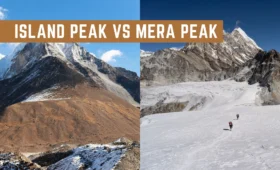
When comparing Island Peak vs Lobuche East Peak climbing, many trekkers and mountaineers wonder which Himalayan peak is the better choice for their first high-altitude climbing experience.
Nepal is home to several of the world’s most spectacular trekking peaks, and Island Peak (6,189 m) and Lobuche East Peak (6,119 m) are among the most popular 6,000-meter-class climbs. Both are located in the Everest (Khumbu) region and combine breathtaking mountain scenery, Sherpa culture, and the adventure of reaching a Himalayan summit.
Although these two peaks share a similar location and climbers often combine them with the Everest Base Camp Trek, they offer very different climbing experiences. Climbers widely regard Island Peak as the ideal introduction to Himalayan mountaineering, featuring glacier travel, fixed ropes, and moderate technical climbing.
Most climbers consider Lobuche East Peak more demanding, with steeper terrain, greater exposure, and a higher level of technical skill required for a successful ascent.
This guide compares the two mountains in detail, including their difficulty, altitude, climbing routes, technical challenges, fitness requirements, costs, permits, best seasons, and overall climbing experience, helping you choose the peak that best matches your experience, fitness level, and mountaineering goals.
Island Peak and Lobuche East Peak Climbing: Overview
Lobuche East Peak Climbing and Island Peak are two of Nepal’s most sought-after 6,000-meter climbing peaks, offering unforgettable Himalayan adventures in the Everest (Khumbu) region.
While both mountains provide spectacular summit experiences and require high-altitude trekking, they differ significantly in their technical difficulty, climbing style, and the skills needed to reach the top. Understanding the unique characteristics of each peak will help you choose the expedition that best matches your experience and climbing goals.
Island Peak (Imja Tse)
Island Peak, formally known as Imja Tse, rises to 6,189 meters (20,305 feet) above sea level in Nepal’s Everest (Khumbu) region. Situated near the Sherpa village of Chhukung within Sagarmatha National Park, it is one of Nepal’s most popular trekking peaks and is widely regarded as the ideal introduction to Himalayan mountaineering.
Eric Shipton’s 1953 expedition named the mountain Island Peak because it appeared like an island surrounded by a sea of glaciers when viewed from Dingboche; Nepalese authorities officially renamed the mountain Imja Tse in 1983. Despite its official name, “Island Peak” remains the most commonly used name among climbers and trekking companies worldwide.
An Island Peak climbing expedition combines the famous Everest trekking route with genuine alpine climbing. Climbers travel across glaciers, cross crevasses, ascend fixed ropes, and tackle a steep snow-and-ice headwall before reaching the summit. Although the climb requires basic mountaineering techniques, it is achievable for fit beginners who prepare properly and climb with experienced guides.
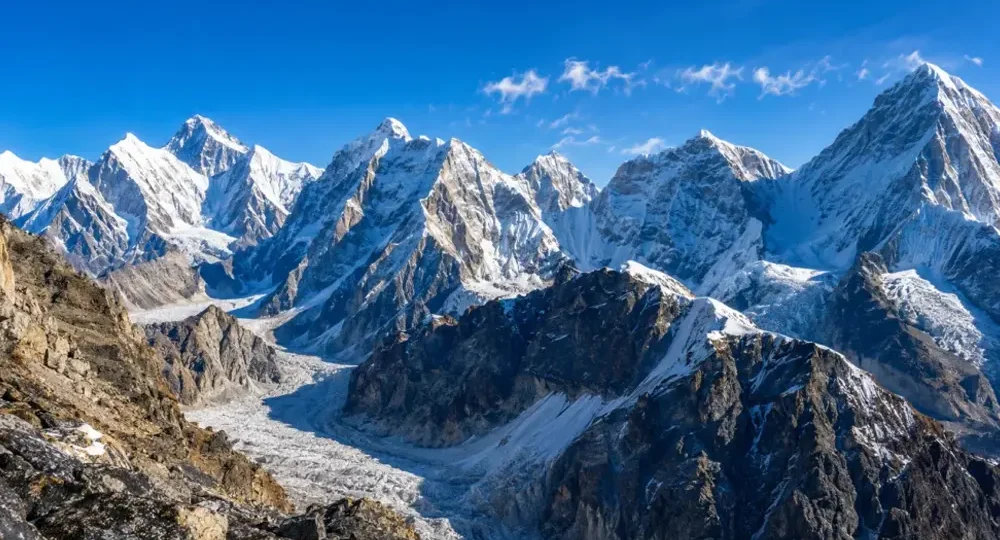
One of the highlights of an Island Peak expedition is the breathtaking panorama from the summit. Climbers are rewarded with close-up views of some of the Himalayas’ most iconic peaks, including Mount Lhotse (8,516 m), Ama Dablam (6,812 m), Nuptse (7,861 m), Baruntse (7,129 m), and the surrounding Everest massif.
Combined with its accessible technical difficulty and classic approach through Sherpa villages, Island Peak has become a favorite stepping stone for mountaineers preparing for higher Himalayan expeditions. See the full itinerary and departure dates on our Island Peak Climbing page.

Lobuche East Peak
Lobuche East Peak stands at 6,119 meters (20,075 feet) and is located in Nepal’s Khumbu region, close to the famous Everest Base Camp trekking route. Positioned above the village of Lobuche and near the Khumbu Glacier, the mountain offers one of the most exciting alpine climbing experiences among Nepal’s trekking peaks.
Unlike Island Peak, Lobuche East climbing has a stronger alpine character, with steeper snow slopes, exposed ridges, mixed rock-and-ice terrain, and longer sections of technical climbing. Although it is slightly lower in elevation than Island Peak, many experienced climbers consider it more demanding because of its greater exposure and sustained technical sections.
A Lobuche East expedition typically follows the classic Everest Base Camp trail, allowing climbers to acclimatize while visiting legendary locations such as Namche Bazaar, Tengboche, Gorak Shep, Kala Patthar, and Everest Base Camp before beginning the summit attempt. This approach combines one of the world’s most famous trekking journeys with a challenging Himalayan climb.
The summit of Lobuche East offers spectacular 360-degree views of the Everest region, including Mount Everest (8,848.86 m), Lhotse (8,516 m), Nuptse (7,861 m), Pumori (7,161 m), Ama Dablam (6,812 m), and countless snow-covered Himalayan peaks.
Because of its technical terrain and demanding summit route, Lobuche East is especially popular among climbers seeking to build advanced mountaineering skills before attempting higher and more challenging expeditions in the Himalayas. See full itinerary and departure dates on our Lobuche East Climbing page.
Island Peak Vs Lobuche East Peak Climbing: Quick Comparison
| Feature | Island Peak (Imja Tse) | Lobuche East Peak |
| Height | 6,189 m (20,305 ft) | 6,119 m (20,075 ft) |
| Region | Everest (Khumbu) Region | Everest (Khumbu) Region |
| Difficulty | Moderate to Challenging | Challenging |
| Technical Level | Moderate | Higher |
| Best For | First Himalayan summit and beginner mountaineers | Experienced trekkers seeking a greater technical challenge |
| Glacier Experience | Required | Required |
| Climbing Style | Trekking peak combined with basic mountaineering | More alpine-style climbing with steeper terrain |
| Summit Success Rate | Generally higher with proper acclimatization and guide support | Lower due to increased technical difficulty and exposure |
Island Peak vs Lobuche East Difficulty Comparison
For most climbers, difficulty is the deciding factor when choosing between Island Peak and Lobuche East. Although both mountains are classified as Nepal trekking peaks and require glacier travel, fixed ropes, and high-altitude endurance, Lobuche East is generally considered the more difficult and technical climb.
Island Peak is widely recommended as a first Himalayan mountaineering objective, while Lobuche East is better suited to climbers with previous mountaineering experience or those looking to develop more advanced alpine skills.
The difference is not the altitude. In fact, Island Peak is slightly higher at 6,189 meters, while Lobuche East stands at 6,119 meters. Instead, the challenge comes from the terrain, technical climbing, route exposure, and the level of climbing skills required to reach the summit.
Island Peak Difficulty
Island Peak is typically graded as moderate to challenging and is regarded as one of the best introductory Himalayan climbing peaks. The expedition combines high-altitude trekking with basic mountaineering techniques, making it an ideal choice for fit beginners who want to gain experience above 6,000 meters.
During an Island Peak climb, you can expect to:
- Trek through the Everest region while gradually acclimatizing
- Cross- glaciers using crampons and ropes
- Navigate around or over crevasses
- Ascend a fixed rope on a snow-and-ice headwall with slopes of approximately 45°–60°
- Walk along a short but exposed summit ridge
Most guided expeditions provide a mountaineering training session at Base Camp, where climbers learn how to use essential equipment such as crampons, a harness, a Jumar (ascender), carabiners, and an ice axe before the summit attempt.
Lobuche East Difficulty
Most climbers consider Lobuche East a challenging climb that requires a higher level of technical ability than Island Peak. Although the summit is slightly lower, the climb features steeper snow slopes, exposed ridgelines, mixed rock-and-ice terrain, and longer sections of sustained climbing.
Climbers on Lobuche East should be comfortable with:
- Moving efficiently on steep snow and ice
- Climbing fixed ropes for longer distances
- Traversing exposed alpine ridges
- Using mountaineering equipment confidently
- Maintaining balance and focus on more technical terrain
The summit ridge is narrower and more exposed than that of Island Peak, requiring greater confidence, careful footwork, and solid rope techniques.
Technical Difficulty Comparison
| Factor | Island Peak | Lobuche East |
| Overall Difficulty | Moderate to Challenging | Challenging |
| Technical Climbing | Moderate | High |
| Glacier Travel | Yes | Yes |
| Fixed Rope Climbing | Yes | Yes (Longer and Steeper) |
| Rock Climbing Sections | Minimal | More Frequent |
| Summit Ridge | Short and Moderately Exposed | Longer and More Exposed |
| Crevasse Crossings | Common | Common |
| Previous Mountaineering Experience | Helpful but Not Essential | Strongly Recommended |
| Suitable for Beginners | Yes, with proper preparation | Generally no. |
Which Peak Is Harder?
For most climbers, Lobuche East offers the more difficult climb. Its sustained technical climbing, steeper terrain, and exposed summit ridge demand greater physical strength, confidence, and mountaineering skills. Even experienced trekkers often find it significantly more demanding than Island Peak.
Island Peak, on the other hand, provides an excellent balance between adventure and accessibility. While it still requires glacier travel, fixed ropes, and the use of technical climbing equipment, its route is more straightforward and is well suited to climbers making the transition from trekking to mountaineering.
Island Peak vs Lobuche East Cost Comparison
Every Island Peak and Lobuche East expedition is customized to meet the climber’s experience, goals, and travel preferences. As a result, the overall trip arrangement varies based on several important factors, including:
- Number of climbers in the group
- Trip duration and itinerary
- Preferred climbing season and travel dates
- Guide service and support staff
- Accommodation preferences in Kathmandu and during the trek
- Climbing equipment included or rented
- Permit requirements and expedition logistics
- Transportation, meals, and porter support
Both expeditions require similar planning, including climbing permits, experienced guides, technical equipment, and high-altitude logistics. The exact itinerary and services can be tailored to match your experience level and climbing objectives.
To prepare the most suitable expedition plan, our team will first understand your preferred travel dates, group size, previous climbing experience, and personal requirements. We will then recommend the most appropriate itinerary and provide a detailed breakdown of the services included.
There is no obligation to book. Our experienced climbing specialists are eager to help you compare both expeditions and choose the Himalayan climb that best matches your experience, fitness level, and mountaineering goals.
Is Island Peak Easier Than Lobuche East?
In several respects, Island Peak asks more of a climber on paper: it sits slightly higher, involves a longer summit day, and still requires a full glacier crossing along with fixed-rope sections on its headwall. Yet in practice, most climbers consider it the easier and more approachable of the two peaks.
That’s because Island Peak benefits from a more beginner-friendly route, a well-established climbing line that thousands of climbers follow each season, and greater climbing support, including on-site training and a higher guide-to-climber ratio on many expeditions. In short, Island Peak’s technical demands are real but manageable, while Lobuche East’s demands are sustained and less forgiving of inexperience.
Why Lobuche East Is Considered More Technical
Lobuche East earns its reputation as the tougher climb for several reasons. Its upper mountain features noticeably steeper climbing sections than Island Peak’s headwall, along with more exposed terrain where a slip carries greater consequence.
Climbers need greater technical confidence to move efficiently on mixed snow, ice, and rock, and the overall experience feels much more like genuine alpine mountaineering than a supported trekking-peak ascent. For this reason, Lobuche East is often recommended as a “next step” peak for climbers who have already completed Island Peak or a similar introductory summit.
Which Peak Should You Choose?
Choose Island Peak if you:
- Are attempting your first Himalayan summit.
- Have strong trekking fitness but limited technical climbing experience.
- Want to learn basic glacier travel and mountaineering skills.
- Plan to progress to higher Himalayan expeditions in the future.
Choose Lobuche East if you:
- Already have experience with high-altitude trekking or mountaineering.
- Are comfortable using crampons, ropes, and alpine climbing equipment.
- Want a more technical and rewarding alpine climbing challenge.
- Are preparing for advanced Himalayan peaks that require stronger technical skills.
For most first-time Himalayan climbers, Island Peak offers the best introduction to high-altitude mountaineering, while Lobuche East is the better choice for those seeking a more technical and demanding alpine expedition.
Technical Skills Required for Island Peak vs Lobuche East
| Skill | Island Peak | Lobuche East |
| Crampon walking | Required | Required |
| Ice axe use | Required | Required |
| Rope climbing | Basic | More advanced |
| Glacier travel | Yes | Yes |
| Technical confidence | Moderate | Higher |
| Previous climbing experience | Helpful | Strongly recommended |
Route and Itinerary Comparison
Island Peak Climbing Route
The typical Island Peak route follows:
Kathmandu → Lukla → Namche Bazaar → Dingboche → Chhukung → Island Peak Base Camp → Summit
This route highlights beautiful Sherpa villages along the trail, sweeping Everest region views, and a gradual acclimatization schedule that helps climbers adjust safely before the summit push from Chhukung.
Lobuche East Climbing Route
The typical Lobuche East route follows:
Kathmandu → Lukla → Namche Bazaar → Tengboche → Dingboche → Lobuche → Base Camp → Summit
This itinerary takes climbers directly through the Everest Base Camp region, offering close-up Khumbu Glacier views and a high mountain environment as the trail climbs toward Lobuche village and beyond.
| Category | Island Peak | Lobuche East |
| Trekking Route | Everest Base Camp region | Everest Base Camp region |
| Base Camp | Island Peak Base Camp | Lobuche East Base Camp |
| Acclimatization | Essential | Essential |
| Summit Day | Long glacier climb | Steeper alpine climb |
Best Time to Climb Island Peak and Lobuche East
Both peaks share the same two prime climbing windows in the Everest region.
Spring Season (March–May)
- Stable weather patterns as winter snow clears
- Good visibility for climbing and photography
- Warmer conditions at altitude compared to winter and early spring
Autumn Season (September–November)
- Clear skies following the summer monsoon
- Dry trails that make trekking to base camp easier
- Excellent mountain views, considered by many the best of the year
Climbers can attempt either Island Peak or Lobuche East in both seasons, though many climbers favor autumn for its consistently stable weather immediately after the monsoon.
Island Peak vs Lobuche East Summit Experience
Island Peak Summit Experience
An Island Peak summit push typically begins with an early morning departure from high camp, followed by a glacier crossing roped up with your team. Climbers then tackle the fixed-rope climbing on the snow-and-ice headwall before reaching the final summit ridge. From the top, the reward is a sweeping panorama that includes Everest, Lhotse, Ama Dablam, and Makalu.
Lobuche East Summit Experience
A Lobuche East summit day carries a noticeably more technical feeling from the outset. Climbers move through steeper sections and spend more time in a true alpine atmosphere, with sustained rope work and careful footwork required throughout. The payoff is a close, wraparound Himalayan panorama that many climbers rank among the finest views available from any Nepal trekking peak.
Island Peak vs Lobuche East: Which One Has Better Views?
| View | Island Peak | Lobuche East |
| Everest | Excellent | Excellent |
| Lhotse | Excellent | Excellent |
| Ama Dablam | Excellent | Good |
| Khumbu Glacier | Good | Excellent |
| Everest Base Camp Area | Good | Excellent |
Both summits deliver world-class Himalayan panoramas, but each has its signature outlook: Island Peak offers an especially striking, close-up view of Ama Dablam’s dramatic profile, while Lobuche East offers a superior vantage over the Khumbu Glacier and the wider Everest Base Camp area.
Island Peak vs Lobuche East After the Everest Base Camp Trek
Many climbers choose to combine their Everest Base Camp trek with a summit attempt, using the EBC trail as a natural acclimatization phase before the climb itself. Two popular combinations stand out:
- Everest Base Camp + Island Peak: ideal for climbers seeking their first Himalayan summit experience alongside the classic EBC trek
- Everest Base Camp + Lobuche East: best suited to strong trekkers looking for an added technical challenge on top of the EBC journey
| Combination | Best For |
| EBC + Island Peak | First Himalayan summit experience |
| EBC + Lobuche East | Strong trekkers seeking a challenge |
Frequently Asked Questions
1. Is Island Peak harder than Lobuche East?
No. While Island Peak is slightly higher, Lobuche East is generally considered the more difficult and technical climb due to its steeper terrain, longer fixed-rope sections, and more exposed summit ridge.
2. Which is better for beginners: Island Peak or Lobuche East?
Island Peak is the better choice for beginners. It offers a more established route, stronger climbing support, and a moderate technical grade suited to climbers transitioning from trekking to mountaineering.
3. Is Lobuche East more technical than Island Peak?
Yes. Lobuche East involves steeper snow and ice, more mixed rock-and-ice terrain, and a narrower, more exposed summit ridge, making it a step up in technical difficulty from Island Peak.
4. How high are Island Peak and Lobuche East?
Island Peak (Imja Tse) stands at 6,189 m (20,305 ft), while Lobuche East stands at 6,119 m (20,075 ft).
5. Do I need climbing experience for Island Peak?
Prior climbing experience is beneficial but not essential. Most guided expeditions include a mountaineering training session at Base Camp to teach the basic skills needed for the climb.
6. Do I need previous mountaineering experience for Lobuche East?
Previous mountaineering or technical climbing experience is strongly recommended for Lobuche East due to its steeper terrain and more demanding technical sections.
7. Which peak has better views?
Both offer excellent views of Everest and Lhotse. Island Peak has a slight edge for close-up Ama Dablam views, while Lobuche East offers superior views of the Khumbu Glacier and Everest Base Camp area.
8. Can I combine Everest Base Camp with these climbs?
Yes. Both Island Peak and Lobuche East are commonly combined with the Everest Base Camp Trek, using the EBC trail for acclimatization before the summit attempt.
9. Which Nepal trekking peak should I climb first?
For most first-time Himalayan climbers, we recommend Island Peak as the best starting point. Climbers seeking a tougher technical challenge, or those who have already summited a peak like Island Peak, often choose Lobuche East next.