
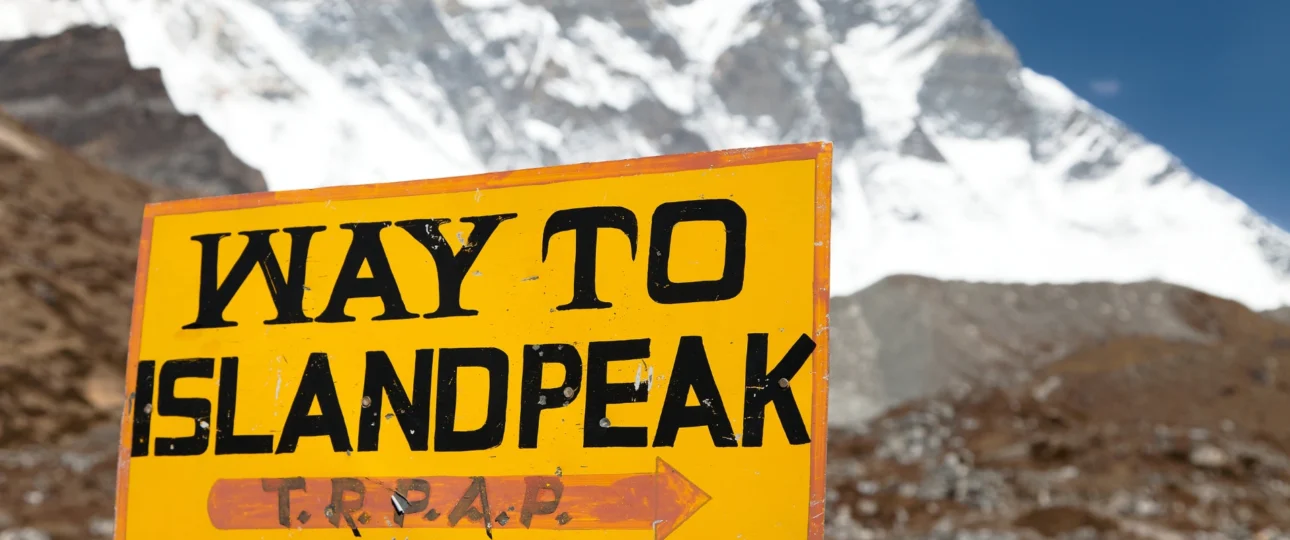
The best time to climb Island Peak (Imja Tse) are autumn (October to mid-November) and spring (April to May). The two seasons that are most worth planning a trip around are spring and fall. The Khumbu experiences the kind of weather that makes glacier travel and summit pushes genuinely predictable from March through May and September through November: clear skies, moderate wind, and snow conditions that don’t move beneath you.
Outside those months, you’re gambling: the monsoon buries the trails in mud and cloud, and winter turns a moderate climb into a genuinely cold, committing one.

Island Peak, or Imja Tse, if you’re going by what the Sherpa community calls it, tops out at 6,189 meters in the Everest region, inside Sagarmatha National Park. It’s one of Nepal’s most climbed peaks because it doesn’t require mountaineering; fit trekkers with basic rope skills can summit it. But “doesn’t require much technical background” isn’t the same as “the weather doesn’t matter.” Snowfall, wind, visibility, and how the glacier is holding together on a given week all swing the difficulty of the climb noticeably, sometimes from day to day.
So the season you pick matters more than almost any other planning decision you’ll make. Spring leans warmer, with rhododendrons blooming along the lower trail and a run of festivals if your trip starts in Kathmandu. Autumn is the crisper, clearer option, and it lines up with Nepal’s biggest cultural calendar. Below is a season-by-season and month-by-month look at what you’re actually walking into.
Quick Overview: Best Seasons for Island Peak Climbing
| Season | Months | Conditions | Recommendation |
| Spring | March–May | Stable weather, clear views | Best |
| Autumn | September–November | Dry weather, excellent visibility | Best |
| Winter | December–February | Cold, snow, challenging | Experienced climbers |
| Monsoon | June–August | Rain, clouds, unstable weather | Not recommended |
Island Peak Climbing in Spring (March to May)
Spring is where most first-time Island Peak climbers end up, and for good reason. The weather stabilizes as the season goes on, daytime temperatures are manageable, and the views tend to hold rather than sock it in by noon like they sometimes do later in the year.
It’s also a good time to be in Kathmandu or the Khumbu, as several of Nepal’s festivals fall within this window.
March: March is still early season. You’ll find fewer people on the trail and route, and there’s often a fresh dusting of snow that makes the high country look genuinely dramatic. The trade-off is cold; nights and summit day are both colder than they will be in April or May, and there’s a real chance of leftover winter ice higher up. If your trip starts in Kathmandu, March sometimes overlaps with Holi, so it is worth timing your arrival around this festival if colorful chaos in the streets sounds appealing.
April: April tends to be the steadiest month of the three. Snow and ice have settled from the winter, the weather holds better than in March, and it’s generally regarded as the most dependable spring window for a summit attempt.
May: May brings warmer days and nights and longer daylight, which makes camp life and acclimatization noticeably easier. What it costs you is a bit of weather reliability; pre-monsoon clouds start building in the afternoons, especially toward the back half of the month, and there’s a small but real chance of early rain. May is also when Buddha Jayanti is celebrated across Nepal, if that’s of interest.
Taken together, spring gives you a choice between quiet trails and cold (March), the most reliable weather of the season (April), or warmth and long days at the cost of some cloud risk (May).
Island Peak Climbing in Autumn (September to November)
Autumn is the other half of the “best time to go” answer, and for many climbers it’s the preferred half; the air clears out after the monsoon in a way that spring can’t quite match. It’s also Nepal’s biggest festival season, so an autumn trip tends to double as a cultural one.
September: September is the transition month. Early on, you’re still shaking off monsoon leftovers, occasional rain, muddy lower trails, and less predictable weather generally. By the second half of the month, though, conditions firm up quickly, and the valleys are at their greenest and freshest.
October: October is the one month almost everyone points to as the best of the year. Skies are reliably clear, routes are dry and well-established, and summit success rates are at their highest. It’s also, unsurprisingly, the busiest month in the Khumbu; expect company on the trail and at camp. October is when Dashain, Nepal’s biggest festival, usually falls.
November: November keeps most of October’s clarity and stability while the crowds thin out considerably. The cost is temperature: nights get noticeably colder, and a colder body moves slower, which can stretch out an already long summit day. Depending on timing, November can line up with Tihar or the Mani Rimdu festival at Tengboche Monastery, both worth seeing if your schedule allows.
Island Peak Climbing During Winter (December to February)
Island Peak climbing during winter is possible, but it is much more challenging than climbing in spring or autumn. From December to February, the Everest region experiences freezing temperatures, heavy snowfall, strong winds, and shorter daylight hours.
These conditions make trekking, glacier travel, and summit attempts more demanding, making winter best suited for experienced climbers with previous high-altitude mountaineering experience.
December: December marks the beginning of winter. The weather is often stable, with clear skies and excellent mountain views, but temperatures drop significantly, especially above 5,000 meters. The trails are quieter, offering a peaceful climbing experience.
January: January is the coldest month of the year on Island Peak. Heavy snowfall, freezing temperatures, and strong winds create the most demanding climbing conditions. While the mountain is at its quietest, only experienced climbers with proper winter equipment should consider climbing in this month.
February: February marks the transition from winter to spring. Weather conditions gradually improve toward the end of the month, although snow and ice remain on higher sections of the route. With fewer climbers than the spring season, February offers a quieter experience while still requiring careful preparation.
Overall, winter offers spectacular snow-covered landscapes, peaceful trails, and a true alpine adventure. However, because of the extreme cold and challenging conditions, spring (March to May) and autumn (September to November) remain the preferred seasons for most Island Peak climbers.
Island Peak Climbing During Monsoon (June to August)
Island Peak climbing during the monsoon is generally discouraged. From June to August, the Everest region receives frequent rainfall at lower elevations, making trekking trails muddy, slippery, and more difficult to navigate.
Thick cloud cover often reduces mountain views, while changing weather can lead to delays or cancellations of flights to Lukla. Although higher elevations usually receive less rain, the approach to Island Peak becomes more challenging because of wet trails and unpredictable conditions.
June: June marks the beginning of the monsoon season. Rainfall gradually increases, and weather becomes less predictable. While the landscapes become greener and quieter, trekking conditions begin to deteriorate.
July: July is the wettest month of the year in the Everest region. Heavy rainfall, thick clouds, and slippery trails make trekking and climbing the most difficult during this period. Flight delays and poor visibility are also more common.
August: August remains part of the monsoon season, although weather conditions often begin to improve toward the end of the month as autumn approaches. The trails remain wet, but clearer skies become more frequent in late August.
Overall, the monsoon season offers lush green landscapes and fewer crowds, but the combination of rain, muddy trails, poor visibility, and unpredictable weather makes it the least favorable time to climb Island Peak.
For the safest and most enjoyable experience, spring (March to May) and autumn (September to November) remain the best seasons for an Island Peak expedition.
Island Peak Weather Conditions by Altitude
Island Peak weather changes significantly as you gain elevation. The climb begins in Lukla (2,860 m), where the climate is relatively mild, and gradually moves into colder, high-altitude conditions through Namche Bazaar (3,440 m) and Dingboche (4,410 m).
By the time climbers reach Island Peak Base Camp (5,200 m), freezing temperatures become common, and the 6,189-meter summit experiences extreme alpine conditions with sub-zero temperatures, strong winds, and low oxygen levels.
Regardless of the season, anyone climbing above 5,000 meters should be prepared for freezing weather with proper layered clothing, insulated boots, and quality cold-weather gear.
Island Peak Temperature During Different Seasons
These numbers describe conditions on the trek and at camp; summit day itself runs colder than any of them, typically -15°C to -25°C, and that’s before wind chill. Throughout the year, Island Peak experiences significant temperature fluctuations. As altitude increases, temperatures drop rapidly, especially above 5,000 meters. During summit day, climbers should always be prepared for sub-zero temperatures regardless of the season.
| Season | Average Day Temperature | Average Night Temperature | Conditions |
| Spring | 5°C to 12°C | -10°C to -5°C | Stable weather with comfortable daytime temperatures and cold nights. |
| Autumn | 3°C to 10°C | -12°C to -6°C | Dry, clear weather with excellent visibility and colder nights. |
| Winter | -5°C to 3°C | -20°C to -15°C | Extreme cold, frequent snowfall, and strong winds. |
| Monsoon | 8°C to 15°C | -2°C to 5°C | Warmer temperatures but frequent rain, clouds, and unstable weather. |
Note: These are approximate Island Peak temperatures by month and season. Actual temperatures vary with altitude, weather systems, and time of day. Summit temperatures can be much lower, especially with wind chill.
Spring vs Autumn: Which Is Better for Island Peak?
Both seasons offer excellent weather and strong summit conditions, so the decision usually hinges on two factors: temperature and crowds. Spring runs a bit warmer and has moderate foot traffic. Autumn is slightly colder but delivers the clearest visibility of the year, and it’s busier, particularly in October.
If warmer nights, quieter trails, and blooming rhododendrons sound better to you, go in spring. If you prefer the sharpest possible mountain views and don’t mind sharing the trail, autumn, especially October, is hard to beat.
Best Month to Climb Island Peak
Choosing the right month can greatly improve your chances of reaching the summit safely. While both spring (March to May) and autumn (September to November) offer excellent climbing conditions, October, April, and November are widely considered the best months for climbing Island Peak.
October: Best Overall
October offers the most stable weather, crystal-clear mountain views, dry trails, and excellent summit conditions. It is widely regarded as the best month for Island Peak climbing.
April: Best Spring Month
April provides stable weather, slightly warmer temperatures, comfortable trekking conditions, and excellent glacier conditions, making it one of the most reliable months for a successful summit.
November: Best for Clear Views
November features clear skies, stable weather, and fewer crowds than October. Although temperatures are colder, it remains an excellent month for climbing and mountain photography.
Factors That Affect Island Peak Climbing Conditions
- Weather Stability: Clear skies and stable weather provide the safest conditions for climbing.
- Temperature: Cold temperatures become more challenging as you gain altitude, especially above 5,000 meters.
- Wind Speed: Strong winds near the summit can affect safety and summit success.
- Snowfall: Fresh snow can make trails, glaciers, and climbing sections more difficult.
- Glacier and Route Conditions: Ice, snow, crevasses, and fixed rope conditions vary throughout the climbing season.
- Visibility: Clear visibility improves navigation, safety, and mountain views, while clouds and fog can delay summit attempts.
- Altitude and Acclimatization: Proper acclimatization is essential to reduce the risk of altitude sickness and improve climbing performance.
- Physical Fitness and Experience: Good fitness and basic mountaineering skills help climbers handle the technical sections more confidently.
- Season of Climbing: Spring (March–May) and autumn (September–November) offer the most reliable weather and the best overall climbing conditions.
How to Choose the Right Time for Your Island Peak Expedition
The best time to climb Island Peak depends on climbing experience, weather preferences, and expedition goals. Spring and autumn offer the most favorable conditions, while winter and the monsoon season present additional challenges.
Choose Spring (March–May) If:
- Warmer temperatures are preferred.
- Fewer crowds are desired.
- Blooming rhododendron forests add to the trekking experience.
- Excellent climbing conditions are a priority.
Choose Autumn (September–November) If:
- Crystal-clear mountain views are preferred.
- Dry and stable weather is important.
- Classic trekking conditions in the Everest region.
- Nepal’s major festivals are part of the travel experience.
Choose Winter (December–February) If:
- Previous mountaineering experience is available.
- Extreme cold and challenging conditions are acceptable.
- A quieter and more demanding expedition is preferred.
Avoid the monsoon (June–August) if:
- Stable weather is a priority.
- Dry trails and better visibility are preferred.
- A higher chance of a successful summit is important.
Regardless of the season, proper acclimatization, careful planning, and experienced guides play an important role in making an Island Peak expedition safe and successful.
Frequently Asked Questions
1. What is the best time to climb Island Peak?
The best time to climb Island Peak is during spring (March to May) and autumn (September to November). These seasons offer stable weather, clear skies, excellent visibility, and the highest chances of a safe and successful summit.
2. Is October good for Island Peak climbing?
Yes. October is widely considered the best month for Island Peak climbing due to its dry weather, crystal-clear mountain views, stable conditions, and high summit success rates.
3. Is April a particularly favorable month to climb Island Peak?
Absolutely. April is one of the best months for climbing Island Peak, offering reliable weather, comfortable temperatures, excellent glacier conditions, and ideal climbing conditions for both beginners and experienced climbers.
4. Can you climb Island Peak in winter?
Yes, but winter climbing is much more challenging. Expect freezing temperatures, strong winds, and heavy snowfall. Winter is recommended only for experienced climbers with the proper equipment and mountaineering experience.
5. Can you climb Island Peak during the monsoon?
Although climbing is possible, the monsoon season (June to August) is generally not recommended due to heavy rainfall, muddy trails, poor visibility, and frequent flight delays to Lukla.
6. What is the weather like on Island Peak?
Island Peak weather changes with altitude and season. Lower elevations are relatively mild, while temperatures above 5,000 meters are usually below freezing. Summit day is typically freezing, with strong winds and thin air.
7. Which month has the best summit success rate?
October generally has the highest summit success rate because of its stable weather, dry conditions, and excellent visibility. April is another outstanding month with similarly favorable climbing conditions.
8. Is spring or autumn better for Island Peak climbing?
Both seasons are excellent. Spring offers slightly warmer temperatures and blooming landscapes, while autumn provides clearer mountain views, dry weather, and outstanding visibility. The best choice depends on personal preference.
9. How cold does it get on the Island Peak summit?
Summit temperatures typically range between -15°C and -25°C, depending on the season and weather conditions. Strong winds can make it feel even colder, so proper cold-weather gear is essential.
10. What is the best season for first-time Island Peak climbers?
For first-time climbers, spring (March to May) and autumn (September to November) are the best seasons. They provide the most stable weather, safer climbing conditions, and the highest chances of a successful summit.