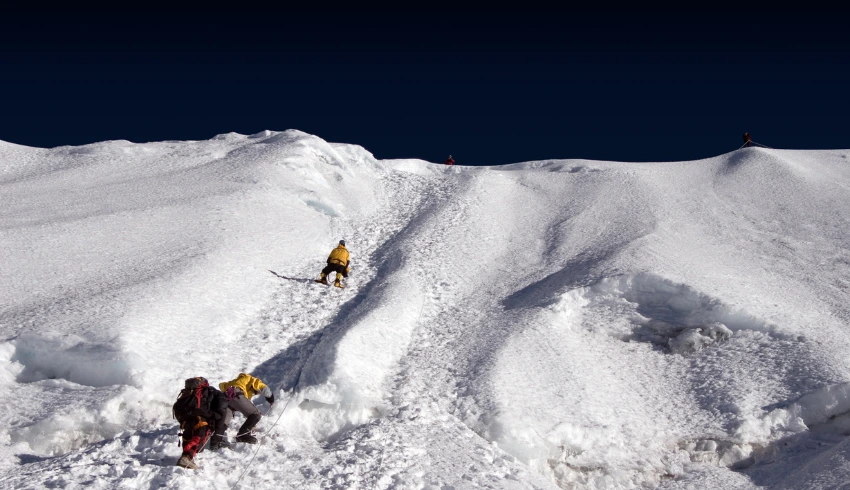
Island Peak Climbing combines the classic Everest region trek with an exciting summit climb, making it one of Nepal’s most popular trekking peaks. The route passes through Namche Bazaar, Tengboche, and Dingboche on this 15-day itinerary before arriving at Chhukung and Island Peak Base Camp. Throughout the trip, licensed guides oversee the logistics, permits, and fixed-rope ascent.
Key Highlights of Island Peak Climbing Expedition
- Summit Island Peak (Imja Tse) at 6,189 meters, one of Nepal’s most popular trekking peaks and an excellent introduction to Himalayan mountaineering.
- Experience the legendary Everest region trekking route, passing through iconic Sherpa villages, including Lukla, Namche Bazaar, Tengboche, Dingboche, and Chhukung.
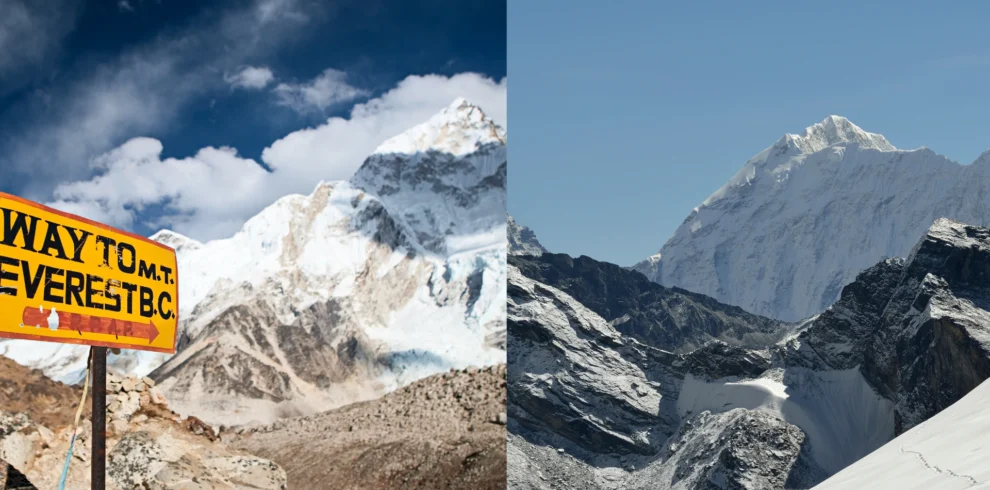
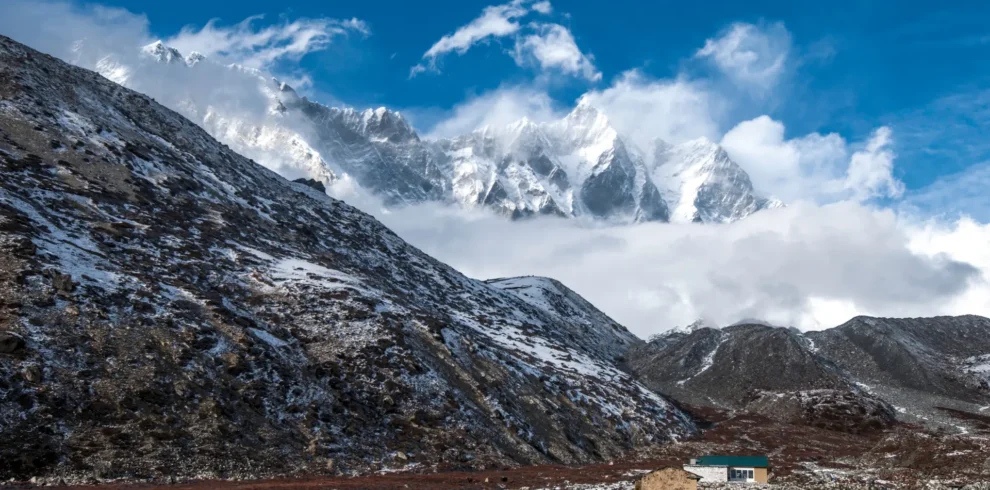
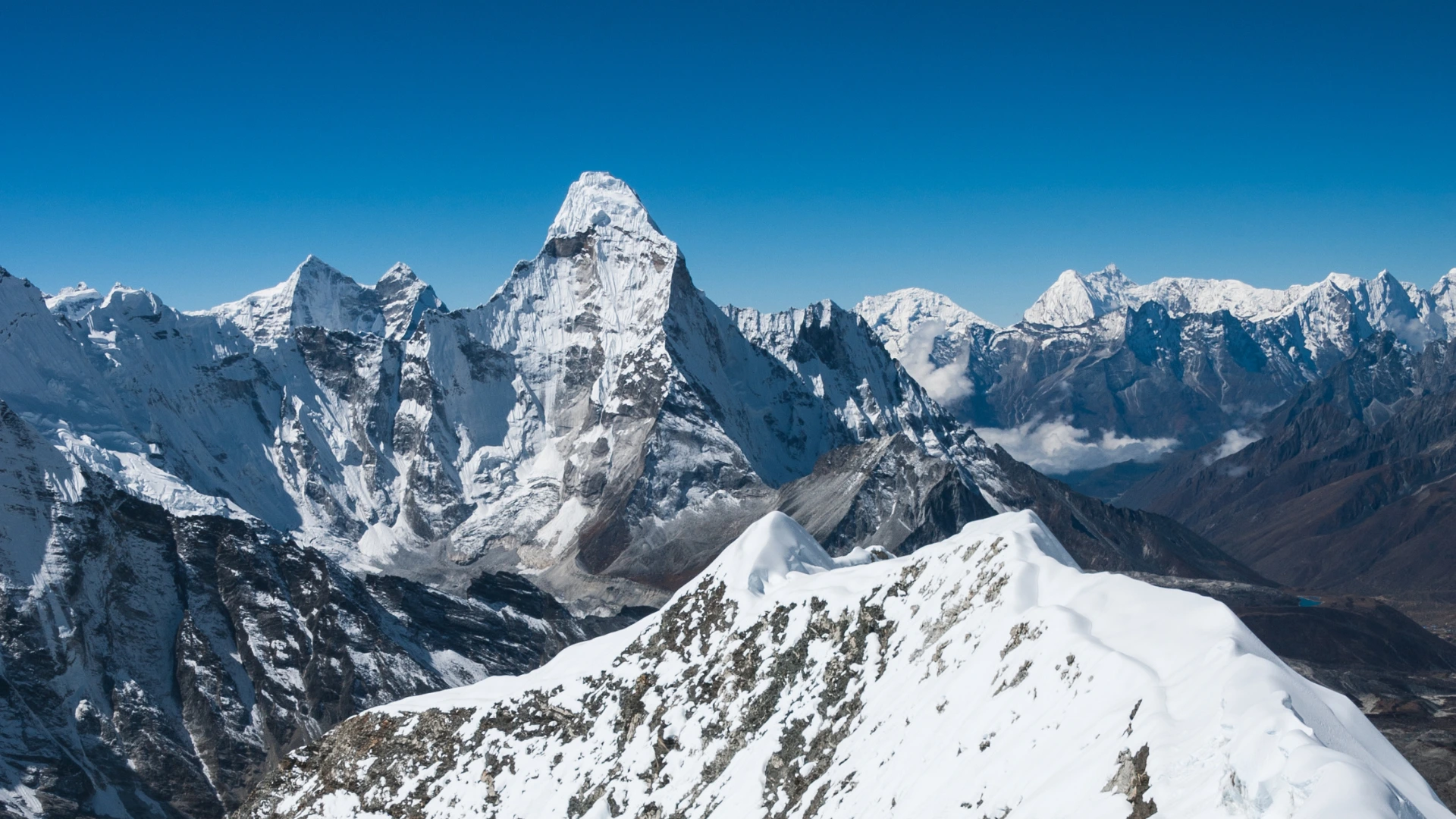
- Enjoy breathtaking Himalayan views of Mount Everest, Lhotse, Nuptse, Ama Dablam, Makalu, Baruntse, and Cho Oyu from the trekking trail and summit ridge.
- Follow a carefully planned 15-day Island Peak climbing itinerary, with proper acclimatization days in Namche Bazaar and Dingboche to support safer progression at high altitudes.
- Experience the thrill of glacier travel, crampon walking, fixed ropes, and a technical summit ascent under the supervision of experienced climbing guides.
- Receive practical climbing training at Island Peak Base Camp, including guidance on rope techniques, crampon use, ice axe handling, and summit preparation.
- Trek through Sagarmatha National Park (UNESCO World Heritage Site) while experiencing the unique Sherpa culture, monasteries, and Himalayan landscapes.
- Benefit from comprehensive expedition support, including climbing permits, accommodation, meals, logistics, and guidance from local professional mountain experts.
- Choose between flexible private expeditions and scheduled departures based on your travel plans and climbing goals.
Quick Facts
- Duration: 15 days (Kathmandu to Kathmandu)
- Maximum altitude: 6,189 m (Island Peak summit)
- Best seasons: Pre-monsoon (March to May) and post-monsoon (September to November)
- Group size: 2 to 12 climbers per departure; private groups available on request
- Accommodation: Hotel in Kathmandu, teahouses on the trekking route, tented camp at Island Peak Base Camp
- Transportation: Domestic flight between Kathmandu (or Ramechhap during peak seasons) and Lukla; private vehicle for airport transfers
- Starting/ending point: Kathmandu, Nepal
- Trip grade: Strenuous trek with technical climbing on summit day (Alpine PD)
- Minimum age: 18 years (exceptions considered on request with prior experience)
Island Peak Climbing Overview
Island Peak climbing (Imja Tse) is one of Nepal’s most rewarding Himalayan adventures. It combines the classic Everest region trekking experience with an exciting high-altitude summit climb.
Rising to 6,189 meters, Island experience withered one of Nepal’s most accessible trekking peaks. It offers climbers the opportunity to experience technical mountaineering skills while surrounded by some of the world’s highest mountains.
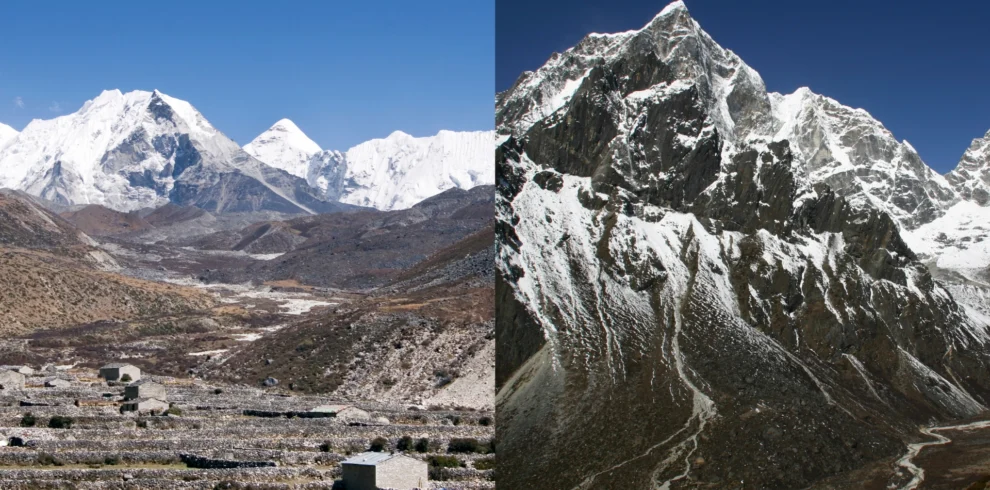
It is located in the Khumbu Valley of the Everest region. Island Peak lies among legendary Himalayan giants, including Lhotse, Nuptse, and Ama Dablam. The climbing follows famous trekking routes through Lukla, Namche Bazaar, Tengboche, Dingboche, and Chhukung. This allows climbers to experience Sherpa culture, ancient monasteries, and the dramatic landscapes of Sagarmatha National Park before reaching Island Peak Base Camp.
The Island Peak expedition combines trekking and climbing, making it an excellent choice for adventure seekers looking to progress from high-altitude trekking into Himalayan mountaineering. For this trek, previous technical climbing experience is not mandatory. Climbers should have good physical fitness, proper preparation, and the ability to adapt to challenging high-altitude conditions to succeed.
Before the summit attempt, our experienced climbing guides provide essential training on climbing equipment, including crampons, ice axe techniques, harness systems, and fixed ropes.
The final ascent involves glacier travel, a crevasse crossing, and a fixed-rope climb toward the summit ridge, creating a true Himalayan climbing experience.
At Island Peak Climbing, operated by Himalayan Luxury Holidays, we manage every important aspect of your journey, including permits, logistics, accommodation, meals, transportation, acclimatization planning, and professional guide support. We have experienced local mountain experts and a safety-focused approach.
We help climbers complete their Island Peak climbing adventure in Nepal with confidence and proper preparation.
Island Peak Climbing Route
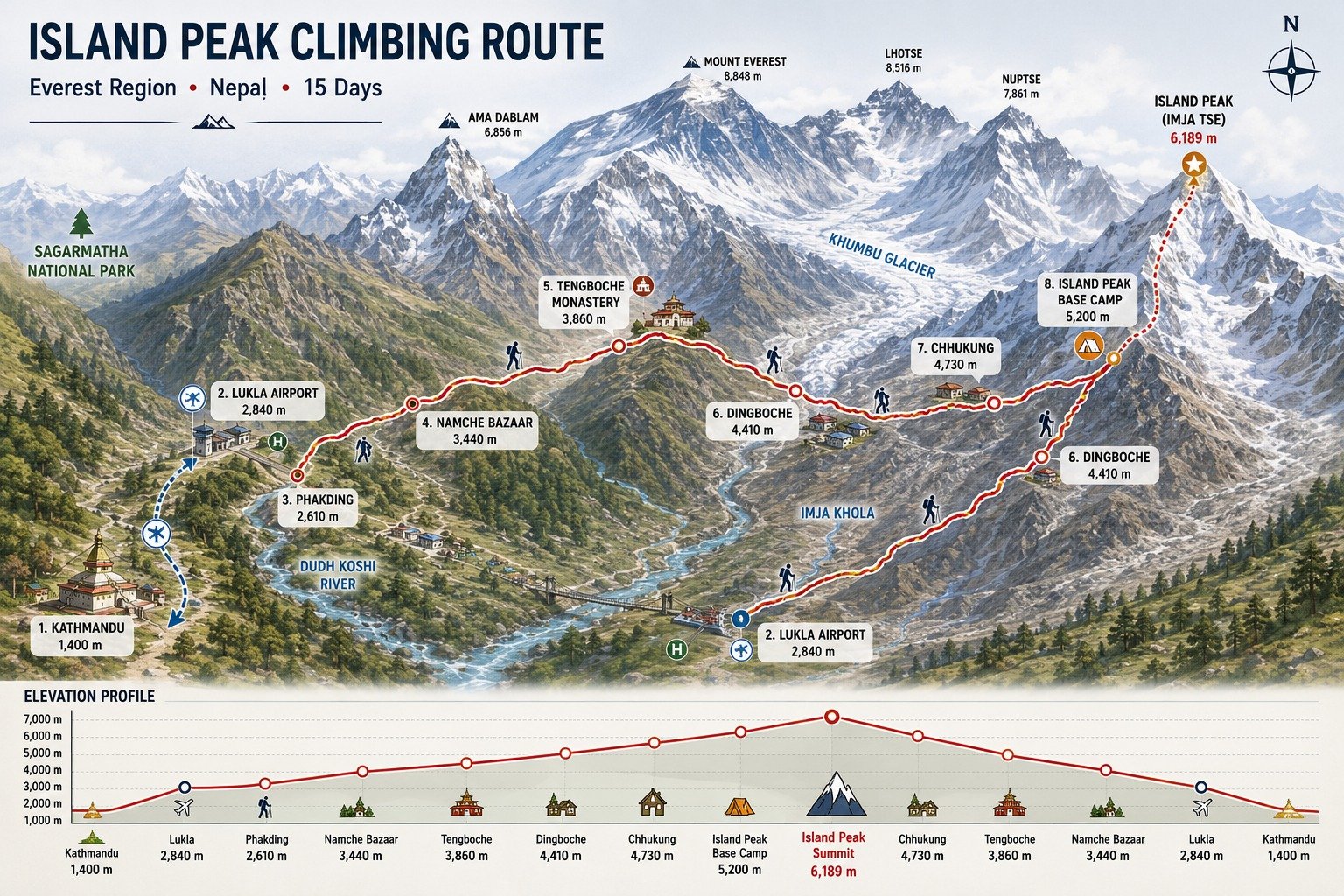
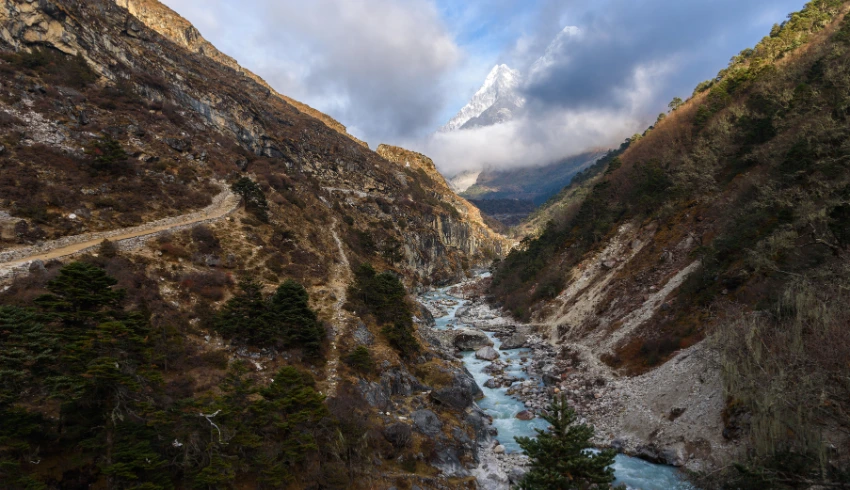
The starting point of the Island Peak climbing route is the flight from Kathmandu to Lukla (2,840 m), where the trek is then begun along the Dudh Koshi River.
You start the trek in Lukla, proceed to Phakding (2,610 m), and then gradually ascend through pine and rhododendron forests to Namche Bazaar (3,440 m), which serves as the Sherpa village.
The path is followed all the way to Tengboche (3,860 m) and the Everest and Ama Dablam panorama, to Dingboche (4,410 m) and Chukhung (4,730 m), past glacial streams and alpine valleys. At Chukhung, the path will take you up to Island Peak Base Camp (5,240 m), where the climbers prepare to climb the summit.
The last effort to get to Island Peak (6,189 m) will include trekking on a glacier, crossing crevasses, and climbing steep parts with the help of fixed ropes.
Upon reaching the summit, the climbers travel the same way, passing by Chukhung, Dingboche, Tengboche, Namche Bazaar, and Lukla. Finally, the trip concludes with a plane ride back to Kathmandu.
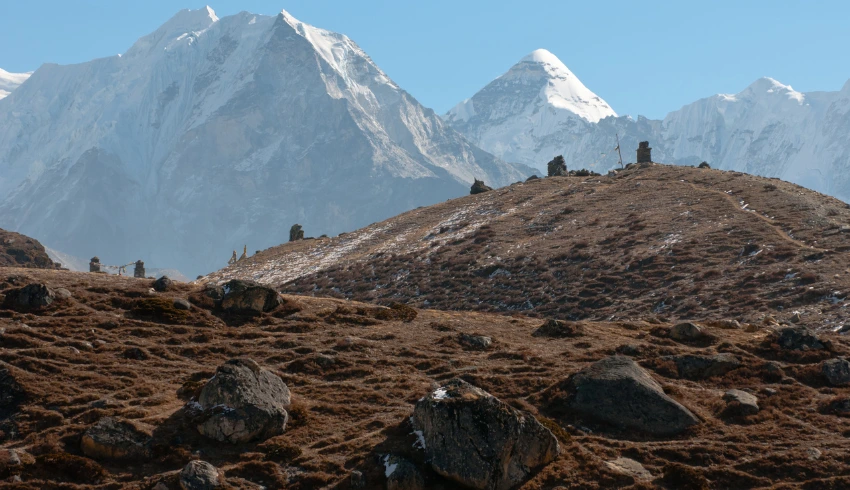
The trail is a mixture of high-altitude trekking, visiting a cultural village, and mountain climbing that provides magnificent Himalayan views at every phase.
Best Time for Island Peak Climbing
The pre-monsoon season, from March to May, forms one of the two primary windows for Island Peak climbing, bringing clearer mornings, moderate daytime temperatures, and rhododendron blooms at lower elevations along the approach trail. Visibility tends to peak earlier in the day before afternoon cloud buildup sets in, which affects both trekking days and summit weather planning.
This season also lines up with the pre-monsoon Everest expedition period, meaning more established camps and support infrastructure at higher elevations, though it can also mean busier trails and teahouses during peak weeks in April and May.
The post-monsoon season, from September to November, offers the second primary climbing window, with drier air, more stable weather, and generally the clearest mountain visibility of the year following the summer monsoon.
Daytime temperatures on the trail stay comfortable, though nights at higher elevations, particularly at Dingboche, Chhukung, and Base Camp, drop well below freezing.
The Nepal Mountaineering Association issues the highest volume of climbing permits during both windows, and we schedule our primary group departures within these periods to line up with favorable summit conditions on Island Peak’s northwest ridge.
Weather, Temperature & Climate Information
Temperatures on the Island Peak route swing sharply with elevation and time of day, running from comfortable daytime conditions in the low to mid-teens Celsius at Namche Bazaar during peak season down to well below freezing overnight at Dingboche, Chhukung, and Island Peak Base Camp. On summit day itself, temperatures can drop to −15°C to −20°C before sunrise, with wind chill pulling the effective temperature down further along the exposed ridge.
Winter months, from December to February, bring harsher cold and higher avalanche risk on the glacier approach, while the monsoon season, from June to August, brings heavy rainfall, leeches at lower elevations, and reduced visibility that complicates both trekking and summit planning. Weather at altitude can shift fast regardless of season, which is why flexibility in the itinerary and reliance on experienced guides for real-time route decisions stay a standard part of the climb.
Island Peak climbing difficulty
The Island Peak climbing package combines two distinct layers of difficulty: the trekking approach and the technical summit day.
The trekking portion follows established Everest region trails with well-defined paths and teahouse infrastructure, but it still requires sustained walking above 4,000 meters for multiple consecutive days, which puts real demand on cardiovascular endurance and altitude tolerance regardless of a climber’s flat-ground fitness level.
Daily walking times run three to seven hours, with cumulative elevation gain forming the main physical challenge rather than technical terrain.
The climbing phase brings a separate category of difficulty entirely, which the international alpine grading system rates as Alpine PD (Peu Difficile).
It involves glacier travel, a crevasse crossing, a fixed-rope ascent on a headwall of 45°–60°, and movement along an exposed summit ridge.
Climbers work with crampons, a harness, an ascender, and an ice axe under direct guide supervision, with a training session at Base Camp covering the necessary technique before the summit attempt.
You don’t need previous climbing experience with ropes, but you should feel comfortable walking on steep and uneven trails, have good balance, and be able to follow your guide’s instructions in cold and physically demanding conditions. These skills make summit day safer and more enjoyable.
Climbers preparing for the trip benefit from cardio-focused training, stair or hill workouts with a loaded pack, and, where possible, a prior high-altitude trek to build tolerance for the thinner air above 5,000 meters.
Physical and Mental Preparation
Getting ready for Island Peak means both a structured fitness program in the months before departure and a realistic sense of what a multi-day climb at altitude asks of a person mentally.
Cardiovascular conditioning, things like running, cycling, or stair climbing three to five times a week for at least two to three months, builds the endurance needed for consecutive high-altitude trekking days.
Strength training focused on the legs and core supports stability on uneven terrain and during the technical climbing phase, while weighted hikes with a daypack help simulate trail conditions.
Mental preparation matters just as much as physical readiness, since summit day involves early starts, prolonged cold exposure, and sustained concentration during the fixed-rope sections.
- Begin cardiovascular training 8–12 weeks before departure.
- Include hill or stair sessions with a loaded pack to simulate trail conditions
- Practice basic use of crampons and an ice axe where possible before arrival
- Prioritize sleep and hydration in the days leading up to departure
- Take acclimatization days seriously rather than pushing ahead of schedule
- Maintain a steady, unhurried pace on trekking days, following the guide’s lead
- Address any pre-existing medical conditions with a physician before booking
- Pack appropriate layers to manage both cold nights and warmer daytime trekking
Accommodation & Meals
We provide accommodation in a centrally located hotel in Kathmandu before and after the expedition. You stay in a comfortable standard room with a private bathroom and hot shower, giving you a convenient place to relax, attend the pre-trip briefing, and rest after your climb.
During the trek, you stay in traditional teahouses operated by local families along the trail. Most rooms are twin-sharing with basic beds and blankets, while bathrooms are usually shared. Hot showers are available in many villages, though they often cost extra at higher altitudes.
Namche Bazaar and Tengboche generally offer more developed teahouse facilities, while options at Dingboche and Chhukung stay simpler, reflecting the smaller size and higher elevation of these settlements.
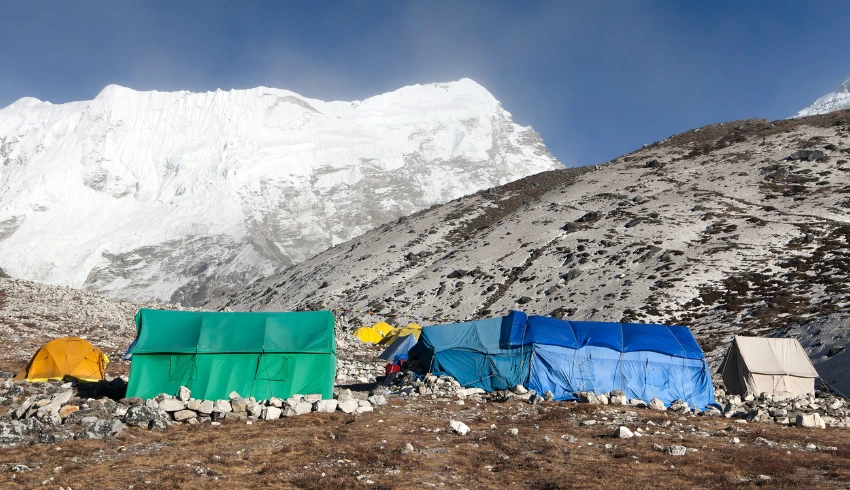
During the climbing phase, accommodation shifts to a tented camp at Island Peak Base Camp, where the support crew sets up and manages sleeping tents, a dining tent, and a kitchen tent.
Climbers should bring sleeping bags rated for high-altitude cold in addition to the tents the crew provides, given overnight temperatures well below freezing at this elevation.
Our package includes meals throughout the full duration of the trip, with menus typically featuring a mix of Nepali staples such as dal bhat, along with pasta, soup, and simpler options at higher elevations where ingredient availability narrows.
The package generally does not include meals in Kathmandu outside of the arrival and departure days, giving climbers flexibility to explore the city’s dining options.
Who Can Do the Island Peak Climbing Trip?
This 15-day Island Peak climbing trip is suitable for trekkers with good physical fitness and previous high-altitude trekking experience, ideally with trekking experience above 4,500 m. Regular cardiovascular training and strong endurance help prepare for the demands of the climb.
Prior technical climbing experience is helpful but not mandatory. Before the summit attempt, our experienced climbing guides provide practical training on using crampons, an ice axe, a climbing harness, an ascender (Jumar), and fixed ropes, ensuring every climber understands the essential techniques and safety procedures. Comfort with exposure, good balance on uneven or icy terrain, and the ability to follow guide instructions under physically demanding conditions all contribute to a safer and more enjoyable climb.
Anyone with pre-existing heart, lung, or other medical conditions that high altitude may affect should consult a physician before booking. We also recommend a medical check-up for anyone with underlying health concerns.
Although we do not require previous climbing experience, we strongly recommend that you complete at least one high-altitude trek above 4,500 m, such as the Everest Base Camp Trek or a similar trek, within the past year. Participants under 18 years old and older climbers are assessed on a case-by-case basis to ensure they are adequately prepared for the expedition.
Why Book Island Peak Climbing With Us?
- Licensed climbing guides certified by the Nepal Mountaineering Association accompany every summit attempt
- We arrange all government permits, park fees, and municipal charges before departure
- Fixed departure dates and private group options work around different schedules
- Guides carry oxygen, first aid kits, and a portable altitude chamber (Gamow bag) on every climbing departure
- An experienced trekking and kitchen crew handles meals and logistics throughout the approach and return
- Direct support from the Island Peak Climbing team before, during, and after the trip, by phone or email
- We maintain strong relationships with teahouse owners and lodges throughout the Khumbu region to provide consistent service.
Booking and Contact
Island Peak offers one of Nepal’s most exciting Himalayan climbing experiences, combining the beauty of the Everest region with a thrilling 6,189-meter summit adventure. Designed for trekkers looking to step into the world of mountaineering, this iconic peak provides the perfect opportunity to experience glacier walking, fixed rope climbing, and high-altitude adventure under the guidance of experienced climbing professionals.
With proper acclimatization, physical preparation, and expert support, you can safely take on this remarkable Himalayan challenge and enjoy breathtaking views of Everest, Lhotse, Ama Dablam, and surrounding peaks. Whether you are planning your first trekking peak climb or preparing for higher expeditions, our Island Peak climbing packages provide a well-planned itinerary, experienced guides, and reliable support for a successful summit journey.
Start your Island Peak adventure with our expert team and turn your Himalayan climbing dream into reality.