
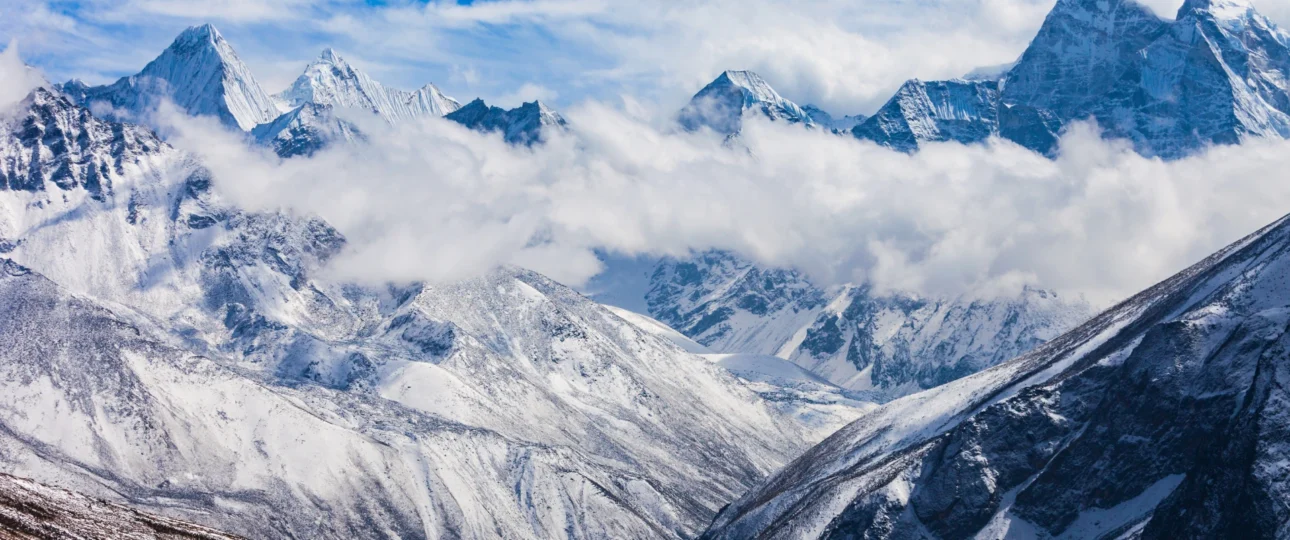
Tucked into northeastern Nepal, the Everest Region is the world’s most iconic destination for trekking, peak climbing, and Himalayan mountaineering.
It’s home to Mount Everest itself, at 8,848.86 meters, the highest point on Earth, and it draws travelers who want more than a walk in the hills; they want glaciers underfoot, Sherpa villages along the trail, and mountain views that don’t fade from memory.
The region mixes snow-capped giants and ancient glaciers with centuries-old monasteries and warm village hospitality. There’s a route here for nearly everyone: gentle introductions like the Everest View Trek, the bucket-list classic to Everest Base Camp, and technical objectives like Island Peak, Mera Peak, and Lobuche East for those ready to test themselves at altitude.
Island Peak Climbing has spent years guiding trekkers and climbers through this landscape. Our Sherpa guides, thoughtfully built itineraries, and safety-first philosophy mean you can focus on the experience rather than the logistics, whether that’s wandering the Khumbu Valley, standing at Base Camp, or topping out on a Himalayan summit.
Locals often call the Khumbu Region a tangle of high valleys, Sherpa settlements, glaciers, and trails that fan out from Everest itself, all sitting within the Solukhumbu District.
The Khumbu Valley is the region’s spine, the route almost everyone takes toward Base Camp or the trekking peaks beyond it. It’s not just a mountaineering playground, either; it’s a living culture, where everyday village life weaves in Buddhist tradition and decades of climbing history.
Location and Geography
The Nepal Everest Region sits in the Solukhumbu District in northeastern Nepal, pressed right up against the Tibetan border. The terrain doesn’t do anything by halves: glacier-fed rivers have carved steep valleys, the Khumbu and Imja glaciers spill down from the high peaks, and the landscape flips from pine forest to bare rock and ice in the space of a few days’ walking.
That’s part of what makes the trekking here so demanding; you gain elevation fast, and the trail follows ground shaped as much by ice as by water.
| Category | Details |
| Country | Nepal |
| Region | Khumbu (Everest) Region |
| Administrative District | Solukhumbu District, Koshi Province |
| Geographic Location | Northeastern Nepal, bordering the Tibet Autonomous Region of China |
| Mountain Range | Himalayas |
| Highest Peak | Mount Everest (8,848.86 m) |
| Major Valleys | Khumbu Valley, Imja Valley, Gokyo Valley, Dudh Koshi Valley |
| Major Glaciers | Khumbu Glacier, Imja Glacier, Ngozumpa Glacier |
| Main River | Dudh Koshi River |
| Protected Area | Sagarmatha National Park (UNESCO World Heritage Site) |
| Main Gateway | Lukla (Tenzing–Hillary Airport) |
| Landscape | Snow-capped mountains, glaciers, alpine forests, deep valleys, rivers, moraines, and high-altitude meadows |
| Elevation Range | Roughly 2,840 m at Lukla up to 8,848.86 m at the summit of Everest |
| Climate | Alpine, high-mountain climate with distinct spring, monsoon, autumn, and winter seasons |
Why Is the Everest Region So Famous?
Every year, thousands of trekkers, climbers, photographers, and nature enthusiasts visit the Everest Region to experience its distinctive combination of dramatic Himalayan scenery, Sherpa culture, and world-famous adventure routes.

Worth knowing: Nepalis call Everest “Sagarmatha,” meaning “Forehead of the Sky,” while Tibetans know it as “Chomolungma,” “Goddess Mother of the World”—names that hint at how much the mountain means spiritually, not just geographically.
The obvious answer is Everest itself. But the region’s reputation runs deeper than one summit; it’s built on staggering mountain scenery, legendary trails, world-class climbing objectives, and a Sherpa culture that’s become inseparable from the story of Himalayan mountaineering.
Trekkers make the pilgrimage along routes like Everest Base Camp, the Gokyo Valley, the Three Passes circuit, and the shorter Everest View Trek, while climbers gravitate toward Island Peak, Mera Peak, and Lobuche East.
Add in the monasteries, the Sherpa villages, and the protected wilderness of Sagarmatha National Park, a UNESCO World Heritage Site, and you start to understand why this corner of Nepal keeps pulling people back.
Why choose Everest Region Trekking & Climbing?
- Local Sherpa guides, licensed professionals who’ve spent their lives reading these trails, this weather, and this terrain.
- Safety comes first: real acclimatization built into the schedule, daily health checks, weather calls made on the ground, and a solid backup plan if something goes wrong.
- The team handles all logistics, including permits, flights, lodging, transport, meals, climbing gear, and support staff, so you can simply show up and walk.
- Hands-on climbing prep before any technical section: your guides walk you through crampons, ice axes, harnesses, and fixed-rope technique until it actually clicks.
- Small groups by design better guide attention, have a tighter guide-to-client ratio, and offer a trip that feels personal rather than like a queue.
- Itineraries built around you: Base Camp, Island Peak, Mera Peak, Lobuche East, or a custom route shaped by your fitness and your timeline.
- No hidden costs: everything we quote is included.
- Deep local knowledge from years working in the Khumbu Valley means insight and logistics you can actually rely on.
- Reliable gear and crews: We work with equipment suppliers and support teams we trust to keep the expedition running smoothly.
- Support that goes beyond booking: from your first message to landing back home, we’re there for planning, permits, and everything in between.
Landscape and Natural Beauty
Few places on Earth pack this much scenery into one region: towering peaks, sprawling glaciers, alpine valleys, and wilderness that’s been protected since Sagarmatha National Park earned its UNESCO status. It’s a magnet for trekkers, climbers, and photographers alike.
Step into the Khumbu Valley, and you’re immediately ringed by giants: Everest at 8,848.86 m and, alongside it, Lhotse (8,516 m), Nuptse (7,861 m), Ama Dablam (6,812 m), Pumori (7,161 m), Thamserku (6,608 m), Cho Oyu (8,188 m), Island Peak (6,189 m), Mera Peak (6,476 m), and Lobuche East (6,119 m). Together they form one of the most recognizable skylines in the Himalayas.
The glaciers are just as remarkable. The Khumbu Glacier, one of the highest in the world, runs from Everest’s flanks down toward Base Camp, while the Imja Glacier sits beneath Island Peak and Lhotse. Trails weave through the Dudh Koshi, Imja, and Gokyo valleys, past glacial rivers and turquoise lakes that seem almost too vivid to be real.
Sagarmatha National Park safeguards more than 1,148 square kilometers of this fragile high-altitude world of forest, alpine meadow, glacier, and bare rock. Snow leopards, Himalayan tahr, musk deer, the colorful Himalayan monal, and blood pheasant all call it home, alongside a long list of alpine birds. Combine that biodiversity with centuries-old Sherpa villages and sacred Buddhist sites, and you get a region that’s as culturally rich as it is wild.
Every season brings its character: rhododendrons blooming in spring, crisp clear views in autumn, snow blanketing the peaks in winter, and alpine meadows coming alive in the warmer months. However you experience it, whether at Base Camp, Gokyo, or one of the trekking peaks, the scenery rarely lets up.
Trekking in the Everest Region
This is trekking territory unlike anywhere else, with trails that wind through the Khumbu Valley past Sherpa villages, centuries-old monasteries, swaying suspension bridges, and glacial rivers, with the Himalayas rarely out of sight. Whether you’re chasing the classic Base Camp route, the quieter beauty of Gokyo, or a full high-pass expedition, the mix of scenery, culture, and genuine adventure is simply unmatched anywhere else in the world.
Everest Base Camp Trek
The trek that made this region famous. It starts with a dramatic flight into Lukla, then works through Sherpa strongholds like Namche Bazaar, Tengboche, Dingboche, and Lobuche on the way to Base Camp itself at 5,364 meters. Most itineraries also tack on Kala Patthar (5,545 m), the go-to viewpoint for Everest, Lhotse, Nuptse, and everything around them.
Gokyo Valley Trek
A quieter route to equally spectacular scenery. This one leads through peaceful Sherpa villages toward the Gokyo Lakes, a chain of sacred turquoise glacial lakes cradled beneath the high peaks. From Gokyo Ri (5,357 m), you get one of the best panoramas in the region: Everest, Lhotse, Makalu, Cho Oyu, and the Ngozumpa Glacier, Nepal’s longest, sprawled out below.
Everest Three Passes Trek
The full Khumbu experience is not for the faint-hearted. It links three demanding passes, Kongma La (5,535 m), Cho La (5,420 m), and Renjo La (5,360 m), while still taking in Base Camp, Kala Patthar, and the Gokyo Valley. Expect remote terrain, big days, and scenery that rewards every bit of the effort.
Everest View Trek
A shorter, gentler way to see the same mountains. This route reaches Namche Bazaar and the Hotel Everest View, one of the highest luxury hotels anywhere, with sweeping views of Everest, Ama Dablam, Lhotse, and Thamserku. It’s a solid choice for families, first-timers, or anyone who wants a genuine taste of the Himalayas without pushing to extreme altitude.
Peak Climbing in the Everest Region
Trekking is only half the story here. The Khumbu is also one of the best places in the world to try real mountaineering without committing to an 8,000-meter expedition. Glacier travel, snow climbing, fixed ropes, and summit views that stop you in your tracks—these peaks offer a genuine step up from trekking, with the right acclimatization and guidance behind you.
Island Peak Climbing (6,189 m)
Nepal’s most popular trekking peak, and for good reason. Rising above the Chhukung Valley, the route mixes glacier crossings, fixed-rope sections, snow slopes, and a narrow summit ridge technical enough to feel like a real climb and accessible enough not to require prior mountaineering experience. The summit views take in Everest, Lhotse, Nuptse, Ama Dablam, Makalu, and Baruntse.
Mera Peak Climbing (6,476 m)
The highest of Nepal’s official trekking peaks. It’s less technical than Island Peak but makes up for it in altitude. This is a fitness and acclimatization test as much as a climb. Reach the top and you’re looking at five of the world’s fourteen highest mountains: Everest, Lhotse, Cho Oyu, Makalu, and Kanchenjunga.
Lobuche East Peak Climbing (6,119 m)
One of the more technical trekking peaks around, and a favorite for climbers looking to sharpen their alpine skills. Sitting close to the base camp trail, it combines steep snow and ice, glacier travel, and a genuinely exhilarating fixed-rope summit ridge. From the top, Everest, Lhotse, Nuptse, Pumori, Ama Dablam, and the Khumbu Glacier spread out below.
Trekking vs. Peak Climbing at a Glance
| Feature | Trekking | Peak Climbing |
| Main Goal | Explore the trails | Reach the summit |
| Technical Skills | Not required | Required |
| Equipment | Trekking gear | Climbing gear |
| Example | EBC Trek | Island Peak |
Famous Places in the Everest Region
- Lukla (2,840 m): The starting line for almost every trek and climb in the region, thanks to the Tenzing–Hillary Airport.
- Namche Bazaar (3,440 m): The largest Sherpa town in the Khumbu and the key acclimatization stop, with lodges, cafés, gear shops, and a genuine window into Sherpa life.
- Tengboche (3,867 m): Home to Tengboche Monastery, the region’s largest and most important Buddhist site, framed by Everest, Lhotse, Ama Dablam, and Nuptse.
- Dingboche (4,410 m): A key acclimatization village in the Imja Valley for both Base Camp trekkers and Island Peak climbers, with wide-open mountain views.
- Everest Base Camp (5,364 m): where expeditions stage their spring summit attempts and where most trekkers experience their first close encounter with the Khumbu Glacier.
- Gorak Shep (5,164 m): The last permanent settlement before Base Camp and the launch point for the Kala Patthar climb.
- Kala Patthar (5,545 m): The region’s best viewpoint, with sunrise and sunset views of Everest, Lhotse, Nuptse, and Pumori that most trekkers rank as the trip’s highlight.
- Gokyo Lakes (4,700–5,000 m) are among the highest freshwater lake systems anywhere; their turquoise water is set against the Ngozumpa Glacier.
- Gokyo Ri (5,357 m): One of the finest viewpoints in the Khumbu, with Everest, Lhotse, Makalu, and Cho Oyu all in view.
- Chhukung (4,730 m): The staging village for Island Peak, tucked into the upper Imja Valley beneath towering peaks and glaciers.
Best Time to Trek or Climb
Spring (March–May) brings stable weather and clearing views as the snow retreats from the lower trails, one of the two prime windows for trekking and climbing alike. Autumn (September–November) is generally the most dependable stretch of the year: dry air, sharp visibility, and consistently excellent conditions for both trekking and summit pushes.
Winter and the summer monsoon (June–August) are tougher, going heavy with cold and snow at altitude in winter and rain and cloud cover in the lower valleys during the monsoon. Most operators steer anything beyond a short, low-altitude visit toward spring or autumn instead.
How Difficult Is It?
Difficulty in the Everest region depends on altitude, trip length, weather, and your fitness, and it varies significantly by route:
- Beginner: The Everest View Trek delivers real mountain scenery on a short, lower-altitude itinerary well suited to first-timers.
- Intermediate: The Everest Base Camp Trek needs solid fitness and proper acclimatization, but no technical skills.
- Advanced: The Three Passes Trek and any of the trekking peaks, including Island Peak, call for greater endurance, technical preparation, and comfort with sustained effort at high altitudes.
Sherpa Culture and Life in the Khumbu
Sherpa families have called the Khumbu Valley home for generations, and they have earned a reputation for mountaineering skill, resilience, and hospitality. Their knowledge of these mountains has shaped Himalayan exploration for over a century, and their guiding has made countless Everest expeditions possible.
That heritage runs through everyday life here. Buddhist tradition shapes the villages, with prayer flags, chortens, mani walls, and spinning prayer wheels lining the trails. Tengboche Monastery, the largest in the Khumbu, remains one of the region’s most significant religious sites.
Farming, yak herding, and cross-Himalayan trade once formed the backbone of Sherpa life; today it’s tourism, with many Sherpas working as guides, lodge owners, porters, and expedition leaders. Even so, the community has held onto its language, festivals, and Buddhist customs, offering visitors something well beyond scenery.
Staying in family-run teahouses, passing through villages like Khumjung, Pangboche, and Dingboche, and picking up on local customs along the way, this experience is where the Everest region becomes something more than a trekking destination. It’s a genuine window into one of the world’s most distinctive mountain cultures.
Getting Ready for the Trip
Good preparation makes the difference between a trip you struggle through and one you actually enjoy. Whether you’re aiming for Base Camp, Gokyo, or a summit like Island Peak, physical conditioning, gradual acclimatization, and the right gear all matter.
- Fitness: Start building cardiovascular fitness, strength, and endurance at least 8–12 weeks out. Loaded hikes, running, cycling, swimming, and stair climbing all pay off on long trekking days.
- Acclimatization: Much of this region sits above 5,000 meters. Choose an itinerary with proper acclimatization days built in, ascend gradually, drink plenty of water, eat well, and don’t rush the elevation gain. Knowing the early signs of altitude sickness matters too.
- Gear-solid trekking: boots, moisture-wicking base layers, insulated clothing, a waterproof shell, warm gloves, sunglasses, a headlamp, trekking poles, and a comfortable pack cover the basics. Peak climbers need crampons, an ice axe, a harness, a helmet, and mountaineering boots, most of which can be rented in Kathmandu.
- Documents and insurance: Bring a valid passport, sort your permits ahead of time, and get travel insurance that covers high-altitude trekking, helicopter evacuation, and medical treatment. Keep both digital and printed copies of everything important.
- Choosing an operator: A reputable local company means experienced guides, sensible acclimatization schedules, dependable logistics, and someone to call if things go wrong, freeing you up to actually enjoy the trip.
Staying Safe on the Trail
Altitude, unpredictable weather, and remote terrain mean safety takes real planning here, not an afterthought.
- Guides matter: Licensed local guides know the terrain, track the weather, spot early signs of altitude sickness, and make the calls that keep a trip on track.
- Acclimatize properly: Gradual ascent, scheduled rest days, good hydration, solid meals, and not overexerting at altitude are key to avoiding altitude illness.
- Watch the weather: conditions shift fast up high. Good guides track forecasts constantly and adjust plans when they need to.
- Bring the right gear: proper layering, sturdy boots, poles, a first-aid kit, and, for climbers, the full technical kit: crampons, an ice axe, a harness, and a helmet.
- Plan for emergencies: Comprehensive insurance covering high-altitude trekking, helicopter evacuation, and medical care is non-negotiable. Reliable operators back their claims up with real emergency procedures and evacuation plans.
- Pick your operator carefully: Experienced Sherpa guides, well-built itineraries, and solid logistics from a trusted local company reduce risk and improve the whole experience.
Frequently Asked Questions
1. What is the Everest Region?
It’s the Khumbu Valley and the surrounding high country in northeastern Nepal, home to Everest and some of the best-known trekking and climbing routes anywhere. Our team has spent years guiding this landscape and knows it trail by trail.
2. Where is it located?
In Solukhumbu District, northeastern Nepal, right against the Tibetan border is precisely the terrain our guides work in every season.
3. What’s the best trek?
Everest Base Camp is the classic, but the Gokyo Valley Trek and the Three Passes Trek are both excellent depending on your experience and how much time you have. We can help you pick the right one and shape an itinerary around it.
4. How hard is trekking here?
It ranges from the beginner-friendly Everest View Trek to the demanding Three Passes route. Altitude, trip length, and weather drive the difficulty either way, and our guides plan around all three to keep things safe and manageable.
5. Which mountains can you actually see?
Everest, Lhotse, Nuptse, Ama Dablam, Pumori, and Island Peak all show up at different points along the trails, and our guides know exactly where to catch the best views.
6. Is Everest Base Camp part of the Everest Region?
Yes, it sits right in the Khumbu Valley, the heart of the region, and it’s one of our most-requested trips.
7. Can beginners trek here?
Definitely, especially on shorter, lower routes like the Everest View Trek. Even Base Camp is realistic for a reasonably fit beginner with the right preparation, and our guides have plenty of experience supporting first-timers.
8. What’s the best season?
Spring (March–May) and autumn (September–November) both bring stable weather and the clearest views. We schedule our departures around these windows for exactly that reason.
9. Which peaks can you climb?
Island Peak, Mera Peak, and Lobuche East are the most popular, each with its own technical demands. We run guided expeditions to all three, with training suited to each one.
10. Is Island Peak in the Everest Region?
Yes, it rises above the Cho La Pass in the Khumbu, and it’s one of our flagship guided climbs.
Ready to Explore the Everest Region?
Whether you’re planning your first Everest Base Camp Trek, a scenic Everest View Trek, or a challenging climb of Island Peak, Mera Peak, or Lobuche East, our experienced Sherpa guides are here to help. Explore our Everest Region trekking and climbing packages or contact us today to start planning your Himalayan adventure.