
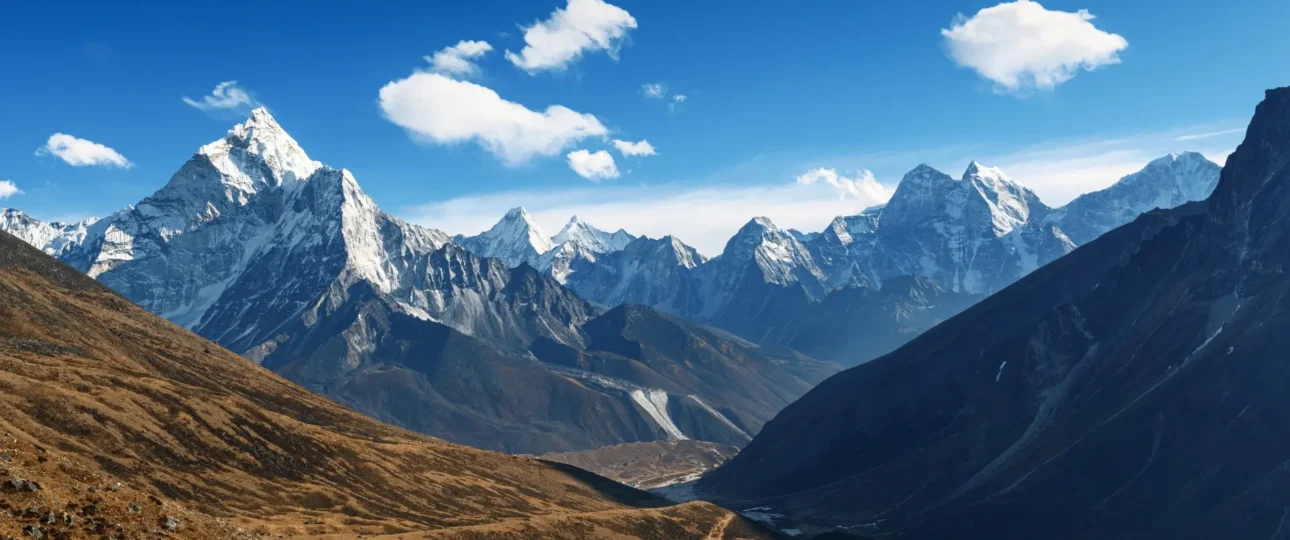
Nepal is the world’s premier destination for trekking and peak climbing, home to eight of the world’s fourteen 8,000-meter mountains and dozens of spectacular Himalayan trekking peaks ranging from around 5,500 to over 6,500 meters.
For trekkers who’ve completed a classic trail and want to go further, and for climbers building toward bigger objectives, trekking peaks in Nepal are the next step. The Nepal Mountaineering Association (NMA) manages a list of formally designated trekking peaks, while Nepal also has many other climbable Himalayan summits that fall under different permit systems.
Each combines glacier travel, snow climbing, and fixed-rope sections with jaw-dropping summit views of Everest, Annapurna, Manaslu, and their neighboring giants. Peaks like Island Peak, Mera Peak, and Lobuche East have become world-famous, while lesser-known summits like Pisang Peak, Yala Peak, and Paldor Peak offer quieter, equally rewarding alternatives.
What makes trekking peaks so appealing is their accessibility. Most require no prior mountaineering experience, just solid fitness, proper acclimatization, and a guided approach to crampons, ice axes, and rope work.
Whether you’re chasing your first 6,000-meter summit or preparing for an eventual Everest expedition, this guide covers everything you need to know: the best peaks, the right season, permits, gear, safety, and how to choose the climb that fits you.
Quick Facts Table
| Category | Details |
| Total Trekking Peaks | 27 peaks officially designated by the Nepal Mountaineering Association (revised from 33 following the NMA’s 2025 restructuring) |
| Altitude Range | Approximately 5,500 m to 6,584 m |
| Regulating Body | Nepal Mountaineering Association (NMA) |
| Governing Framework | Divided into Group A and Group B peaks |
| Best Regions | Khumbu, Annapurna, Langtang, Manaslu, Rolwaling |
| Best Seasons | Spring (March–May) and Autumn (September–November) |
| Popular Beginner Peaks | Island Peak, Mera Peak, Yala Peak, Pisang Peak |
| Technical Peaks | Lobuche East, Chulu East, Kyajo Ri, Singu Chuli |
| Permit Cost | Approximately USD 350 in spring and USD 175 in autumn, winter, and summer; six lower-altitude peaks (under 5,800 m) are now royalty-free |
| Typical Duration | 15–22 days, including trekking and acclimatization |
| Required Gear | Crampons, ice axe, harness, helmet, fixed-rope ascender |
| Guide Requirement | A licensed climbing guide is mandatory for all trekking peaks |
What Are Trekking Peaks in Nepal?

Trekking peaks are a specific category of Himalayan mountains, officially defined and regulated by the Nepal Mountaineering Association, that sit at the intersection of trekking and mountaineering.
Unlike Nepal’s major 8,000-meter giants, which require Department of Tourism permits, liaison officers, and months of expedition planning, trekking peaks are climbed with a permit issued by the NMA and a much lighter logistical footprint.
The term is slightly misleading, since these mountains still involve glacier crossings, crevasse navigation, fixed ropes, and exposed summit ridges. What sets them apart is scale and accessibility: climbs are usually completed in a single push from a high camp, technical sections are short, and most peaks don’t demand prior climbing certification.
This makes them the ideal proving ground for trekkers ready to add a technical, high-altitude summit to a classic trekking itinerary, such as combining Island Peak with the Everest Base Camp trek or Mera Peak with a remote Hinku Valley approach.
Trekking Peaks vs Expedition Peaks
| Feature | Trekking Peaks | Expedition Peaks |
| Altitude | Roughly 5,500–6,584 m | Typically above 7,000 m, including 8,000 m giants |
| Permit Authority | Nepal Mountaineering Association (NMA) | Nepal Department of Tourism |
| Technical Demand | Moderate: fixed ropes, glacier travel, snow slopes | High: extended technical climbing, multiple camps |
| Duration | 15–22 days | 45–70+ days |
| Experience Needed | Good fitness, basic training provided on-site | Prior high-altitude mountaineering experience |
| Cost | Comparatively affordable | Significantly higher due to logistics and permits |
| Examples | Island Peak, Mera Peak, Lobuche East | Everest, Manaslu, Annapurna I |
Trekking peaks are the accessible entry point into Himalayan mountaineering, while expedition peaks require a serious, multi-week commitment to high-altitude climbing at its most demanding.
Why Choose Nepal for Trekking and Peak Climbing?
Nepal is widely regarded as the world’s best destination for trekking and peak climbing. Nowhere else offers such a remarkable combination of accessible 5,000–6,500-meter summits, legendary trekking routes, experienced climbing guides, and breathtaking Himalayan scenery.
Whether you’re attempting your first snow-covered summit or preparing for future high-altitude expeditions, Nepal provides an unmatched environment to build your mountaineering skills safely.
Beyond its exceptional climbing opportunities, Nepal features well-established trekking infrastructure, comfortable teahouse accommodation, reliable domestic access, and decades of professional guiding experience.
Many trekking peaks are located alongside iconic routes such as the Everest Base Camp Trek and Annapurna Circuit, allowing climbers to combine world-famous trekking with a genuine Himalayan summit in a single journey.
Climb World-Famous Himalayan Peaks
Nepal offers the largest selection of trekking peaks in the world, including famous climbs such as Island Peak, Mera Peak, Lobuche East, Pisang Peak, Chulu East, Yala Peak, and many lesser-known summits. Climbers can choose routes suitable for beginners, intermediate mountaineers, or experienced alpine climbers.
Spectacular Mountain Views
Few destinations can match the panoramic scenery found on Nepal’s trekking peaks. Depending on your chosen route, summit views may include Mount Everest, Lhotse, Makalu, Cho Oyu, Kanchenjunga, Annapurna, Dhaulagiri, Manaslu, Ama Dablam, and countless snow-covered Himalayan peaks.
Perfect Combination of Trekking and Climbing
Most trekking peaks combine with Nepal’s world-famous trekking routes, so climbers can experience both cultural trekking and technical mountaineering in a single journey. Popular combinations include Island Peak with Everest Base Camp Trek, Mera Peak via the Hinku Valley, Pisang Peak with the Annapurna Circuit, and Yala Peak with the Langtang Valley Trek.
Excellent Climbing Infrastructure
Nepal has decades of mountaineering experience supported by licensed climbing guides, well-established trekking trails, comfortable teahouses, professional logistics, rescue services, and reliable equipment rental facilities in Kathmandu. This makes Himalayan climbing more accessible and safer than many other mountain destinations.
Rich Himalayan Culture
Every climbing expedition passes through traditional mountain villages where visitors experience the unique cultures of the Sherpa, Gurung, Tamang, Rai, and other Himalayan communities. Ancient monasteries, colorful prayer flags, local hospitality, and centuries-old mountain traditions make every expedition about much more than reaching the summit.
Suitable for Every Experience Level
Nepal offers trekking peaks for almost every ability. Beginners often start with Yala Peak, Island Peak, or Mera Peak, while experienced climbers can challenge themselves on Lobuche East, Chulu East, Kyajo Ri, Pachermo, and other technical summits. This wide range of options allows climbers to progress gradually toward more demanding Himalayan expeditions.
Popular Trekking Peak Regions in Nepal
Nepal’s trekking peaks span several spectacular Himalayan regions, each providing a unique combination of mountain scenery, trekking experiences, and climbing challenges.
While every region has its own character, the Everest, Annapurna, and Langtang regions remain the country’s premier destinations for trekking peak climbing.
From the legendary glaciers of the Khumbu to the rugged landscapes of Annapurna and the peaceful valleys of Langtang, climbers can choose routes that match their experience level, fitness, and mountaineering goals.
Whether you’re planning your first Himalayan summit or looking to expand your alpine climbing experience, these regions provide excellent opportunities to combine world-class trekking with rewarding peak ascents.
Each area features professionally guided expeditions, established trekking routes, comfortable teahouse accommodation, and breathtaking views of Nepal’s highest mountains. Together, they showcase why Nepal is regarded as the world’s leading destination for trekking peak climbing.
Everest Region Trekking Peaks
The Everest Region (Khumbu) is the most famous destination for trekking in Nepal, attracting climbers from around the world who want to experience Himalayan mountaineering beneath the shadow of Mount Everest (8,848.86 m).
Home to dramatic glaciers, iconic Sherpa villages, and the legendary Everest Base Camp Trek, the Khumbu offers the perfect environment for combining trekking with technical climbing.
Many climbers spend several days acclimatizing while trekking through Namche Bazaar, Tengboche, Dingboche, and Chhukung before attempting one of the region’s renowned trekking peaks.
The Everest Region features some of Nepal’s most sought-after climbing objectives, suitable for ambitious beginners through experienced mountaineers. Each peak offers a unique challenge, spectacular summit views, and valuable high-altitude climbing experience.
Island Peak (Imja Tse) – 6,189 m
Island Peak is Nepal’s most popular trekking peak and is widely regarded as the perfect introduction to Himalayan mountaineering. Located in the Khumbu Valley, near the village of Chhukung, the climb combines glacier travel, snow slopes, fixed-rope climbing, and a narrow summit ridge, providing climbers with a genuine alpine experience without the commitment of a major expedition.
The summit rewards climbers with unforgettable panoramic views of Everest, Lhotse, Nuptse, Ama Dablam, Makalu, and Baruntse.
Highlights:
- Nepal’s most popular trekking peak
- Located in the beautiful Khumbu Valley
- Ideal first Himalayan climbing experience
- Includes glacier travel and fixed-rope climbing
- Excellent preparation for future high-altitude expeditions
- Commonly combined with the Everest Base Camp Trek
Mera Peak – 6,476 m
Standing at 6,476 meters, Mera Peak is the highest officially recognized trekking peak in Nepal and one of the country’s most rewarding climbs. Although technically less demanding than Island Peak, its greater altitude makes it a physically challenging expedition that requires excellent fitness and proper acclimatization. The climb follows the remote and scenic Hinku Valley before reaching a broad glaciated summit with one of the finest mountain panoramas in the Himalayas. From the summit, climbers can admire five of the world’s fourteen highest mountains: Everest, Lhotse, Cho Oyu, Makalu, and Kanchenjunga.
Highlights:
- Highest officially recognized trekking peak in Nepal
- Less technical than many other 6,000-meter peaks
- Demands strong endurance and acclimatization
- Spectacular panoramic views of five 8,000-meter mountains
- Excellent choice for first-time 6,000-meter climbers
Lobuche East Peak – 6,119 m
Lobuche East Peak is one of the Everest Region’s most technical trekking peaks and is highly recommended for climbers looking to develop advanced alpine skills.
Situated close to the Everest Base Camp route, the climb involves glacier travel, steep snow and ice slopes, exposed ridges, and fixed-rope climbing, offering a more demanding challenge than Island Peak or Mera Peak. The summit delivers breathtaking views of Everest, Lhotse, Nuptse, Pumori, Ama Dablam, and the Khumbu Glacier.
Highlights:
- Located near the Everest Base Camp trekking route
- More technical than Island Peak and Mera Peak
- Involves glacier climbing and steep snow slopes
- Ideal training peak for advanced Himalayan expeditions
- Outstanding panoramic summit views
Annapurna Region Trekking Peaks
The Annapurna Region is Nepal’s second-most popular destination for trekking and peak climbing, renowned for its spectacular mountain scenery, diverse landscapes, and rich cultural heritage.
Centered around the famous Annapurna Circuit and the picturesque Manang Valley, the region offers a collection of trekking peaks that combine rewarding summit climbs with one of the world’s classic trekking routes.
Climbers travel through traditional Gurung and Manangi villages, alpine forests, deep river valleys, and high mountain passes before reaching glaciated alpine terrain.
The Annapurna Region is particularly attractive for climbers seeking a more remote Himalayan experience while still enjoying well-established trekking infrastructure. Peaks such as Pisang Peak, Chulu East, and Chulu West provide progressively greater challenges, making the region suitable for both developing mountaineers and experienced climbers.
Pisang Peak (6,091 m)
Located above the traditional village of Pisang in the Manang Valley, Pisang Peak is one of Nepal’s most accessible trekking peaks. The climb combines alpine trekking, moderate snow climbing, and a rewarding summit with magnificent views of the Annapurna Massif, Gangapurna, Tilicho Peak, and Manaslu. It is frequently combined with the Annapurna Circuit.
Highlights:
- Popular peak along the Annapurna Circuit
- Moderate technical difficulty
- Superb views over Manang Valley and the Annapurna Range
- Excellent introduction to alpine climbing
Chulu East (6,584 m)
Chulu East is one of Nepal’s highest trekking peaks and offers a more demanding mountaineering experience than Pisang Peak. Climbers encounter glacier travel, snow climbing, and steeper summit slopes that require good technical skills and strong physical conditioning. The summit provides breathtaking views of Annapurna II, Annapurna III, Annapurna IV, Dhaulagiri, Gangapurna, and Tilicho Peak.
Highlights:
- One of Nepal’s highest trekking peaks
- More technical than Pisang Peak
- Glacier travel and snow climbing
- Outstanding Himalayan panoramas
Chulu West (6,419 m)
Chulu West is regarded as one of the most technically challenging trekking peaks in the Annapurna Region. The climb involves longer glacier sections, steeper snow slopes, and exposed ridge climbing, improving its suitability for experienced climbers with previous high-altitude experience.
Highlights:
- Technical alpine climbing experience
- Remote mountain environment
- Stunning views across the Annapurna and Dhaulagiri ranges
- Suitable for experienced climbers
Langtang Region Trekking Peaks
The Langtang Region offers a quieter alternative to Nepal’s busier trekking areas while still providing exceptional mountain scenery and rewarding climbing opportunities. Located just north of Kathmandu, Langtang is known for its beautiful alpine valleys, glacial landscapes, and strong Tibetan cultural influence.
Fewer crowds, shorter travel times, and welcoming Tamang communities make this region particularly attractive for first-time climbers and those seeking a more peaceful Himalayan adventure.
The region is home to Yala Peak and Naya Kanga (Ganja La Chuli), two excellent trekking peaks that combine straightforward access with spectacular views of the Langtang Himal, Ganesh Himal, Shishapangma, and surrounding glaciers.
Yala Peak (5,500 m)
Yala Peak is widely considered one of Nepal’s most beginner-friendly trekking peaks. The climb requires only basic mountaineering skills and is often recommended as a first Himalayan summit for trekkers wishing to gain high-altitude climbing experience. It is also one of the peaks now classified as royalty-free under the NMA’s revised fee structure.
Highlights:
- Ideal for beginner climbers
- Short expedition from Kathmandu
- Minimal technical difficulty
- Royalty-free permit under current NMA rules
- Magnificent views of Shishapangma and the Langtang Range
- Naya Kanga (5,844 m)
Naya Kanga, also known as Ganja La Chuli, offers a more challenging climb than Yala Peak while remaining less crowded than the famous Everest trekking peaks. The ascent includes glacier travel, snow climbing, and fixed-rope sections, rewarding climbers with spectacular panoramic views across the Langtang Himal and surrounding mountain ranges.
Highlights:
- Less crowded than the Everest Region
- Moderate technical climbing
- Beautiful glacier landscapes
- Strong Tibetan-influenced mountain culture
- Excellent progression after Yala Peak
Complete List of Nepal Trekking Peaks
| Trekking Peak | Altitude (m) | Region | Difficulty | Best For |
| Island Peak (Imja Tse) | 6,189 | Everest (Khumbu) | Moderate | First Himalayan climbing experience |
| Mera Peak | 6,476 | Everest (Hinku Valley) | Moderate | Highest beginner-friendly trekking peak |
| Lobuche East | 6,119 | Everest (Khumbu) | Challenging | Developing technical climbing skills |
| Kyajo Ri | 6,186 | Everest (Khumbu) | Technical | Experienced mountaineers |
| Pisang Peak | 6,091 | Annapurna | Moderate | Annapurna Circuit climbers |
| Chulu East | 6,584 | Annapurna | Challenging | Experienced climbers seeking a higher summit |
| Chulu West | 6,419 | Annapurna | Technical | Advanced alpine climbing |
| Chulu Far East | 6,059 | Annapurna | Moderate | Less technical alternative to Chulu East |
| Tent Peak (Tharpu Chuli) | 5,663 | Annapurna Sanctuary | Moderate | Annapurna Base Camp extension |
| Singu Chuli (Fluted Peak) | 6,501 | Annapurna Sanctuary | Technical | Experienced climbers |
| Yala Peak | 5,520 | Langtang | Easy | Beginners and first-time climbers |
| Naya Kanga (Ganja La Chuli) | 5,844 | Langtang | Moderate | Climbers progressing after Yala Peak |
| Paldor Peak | 5,896 | Ganesh Himal | Moderate | Shorter Himalayan expeditions |
| Pachermo | 6,273 | Rolwaling | Technical | Remote alpine climbing |
| Ramdung Peak | 5,930 | Rolwaling | Challenging | Climbers seeking less-crowded routes |
| Mardi Himal Peak | 5,587 | Annapurna | Easy-moderate | Short climbing itineraries |
Note: Trekking peaks in Nepal are managed under the Nepal Mountaineering Association (NMA). Permit requirements, classifications, and regulations may change over time, so always confirm the latest requirements before planning your expedition.
Best Trekking Peaks for Beginners
For first-time climbers, Yala Peak, Island Peak, and Mera Peak stand out as the most approachable options. Yala Peak requires the least technical skill and can be climbed after just a day of training.
Island Peak, while more demanding, is well-supported with established routes and extensive guiding experience, making it the classic entry point into Himalayan mountaineering. Mera Peak, despite its altitude, is technically gentle, so success there depends mainly on fitness and acclimatization rather than climbing skill.
Best 6,000-Meter Peaks
Climbers specifically chasing a 6,000-meter summit have excellent options across difficulty levels. Island Peak (6,189 m) and Lobuche East (6,119 m) provide moderate technical challenges, along with legendary views of the Khumbu.
Chulu East (6,584 m) and Singu Chuli (6,501 m) push into more demanding territory for climbers with prior experience. For those wanting the highest trekking peak summit available, Mera Peak (6,476 m) delivers serious altitude with comparatively gentle technical demands.
Difficulty Levels of Trekking Peaks in Nepal
| Difficulty Level | Suitable For | Typical Features | Recommended Peaks |
| Easy | Fit beginners with no climbing experience | Non-technical terrain, basic snow slopes, minimal glacier travel, introductory mountaineering | Yala Peak, Mardi Himal Peak, |
| Moderate | First-time climbers with good fitness | Glacier crossings, fixed ropes, moderate snow and ice slopes, basic rope techniques | Island Peak, Mera Peak, Pisang Peak, Tent Peak (Tharpu Chuli) |
| Challenging | Climbers with previous high-altitude or basic technical experience | Steeper snow and ice climbing, exposed ridges, longer glacier travel, greater physical demands | Lobuche East, Chulu East, Ramdung Peak, Naya Kanga |
| Technical | Experienced mountaineers | Sustained rock, snow, and ice climbing, steep ascents, advanced rope systems, route finding, and glacier navigation | Kyajo Ri, Singu Chuli (Fluted Peak), Pachermo, Chulu West |
Best Time to Climb Trekking Peaks
Spring (March to May) offers warming temperatures, stable weather, and receding winter snow, making it one of the two prime climbing windows. Autumn (September to November) is generally regarded as the most reliable season overall, with dry air, clear skies, and consistent conditions for summit pushes.
Winter brings extreme cold and heavy snow at altitude, while the summer monsoon (June to August) causes poor visibility and increased avalanche risk, so most operators restrict climbing to spring and autumn.
Permits for Trekking Peaks
Climbing a trekking peak in Nepal requires several permits, depending on the mountain and the region you plan to visit. Most trekking peaks are administered under the Nepal Mountaineering Association (NMA), while climbers must also obtain the appropriate national park or conservation area entry permits for their chosen route.
In addition to the climbing permit, some regions require local municipality or trekking permits. For example, climbers in the Everest (Khumbu) region need the Khumbu Pasang Lhamu Rural Municipality Permit and the Sagarmatha National Park Entry Permit, while other regions, such as Annapurna and Langtang, require the relevant conservation area permits.
A licensed climbing guide is mandatory for all trekking peak expeditions in Nepal. Your trekking or expedition operator typically arranges all required permits and handles the necessary paperwork before the climb, allowing you to focus on preparation and the adventure ahead.
Essential Equipment
Climbers need both standard trekking gear and technical mountaineering equipment. Trekking essentials include insulated clothing, a down jacket, sturdy trekking boots, trekking poles, and a four-season sleeping bag.
Technical climbing gear includes crampons, an ice axe, a climbing harness, a helmet, an ascender/jumar, a belay device, and mountaineering boots rated for high altitude. Most technical equipment can be rented in Kathmandu, though experienced climbers often prefer to bring their own well-fitted gear.
Preparation and Training
A successful trekking peak climb begins long before you arrive in Nepal. Proper physical conditioning, technical preparation, and gradual acclimatization significantly increase your chances of reaching the summit safely.
- Build cardiovascular fitness through hiking, running, cycling, or stair climbing for at least 8–12 weeks before your trip.
- Strengthen your legs and core with exercises such as squats, lunges, step-ups, planks, and hill training to prepare for long days on rugged terrain.
- Practice hiking with a loaded backpack to improve endurance and become comfortable carrying essential gear at altitude.
- Train at higher elevations, if possible, to help your body adapt to thinner air before arriving in Nepal.
- Learn basic mountaineering skills, including using crampons, an ice axe, a climbing harness, ascenders (jumars), and fixed ropes.
- Follow a well-planned acclimatization schedule by gaining altitude gradually and including rest days to reduce the risk of altitude sickness.
- Choose a professionally guided expedition, where experienced climbing guides provide pre-climb training, route instruction, and continuous support throughout the ascent.
- Use properly fitted climbing equipment and test your boots, clothing, and technical gear before the expedition to ensure comfort and reliability.
- Stay hydrated and maintain a balanced diet before and during the climb to support energy levels, recovery, and acclimatization.
- Prepare mentally for long trekking days, changing mountain weather, and challenging summit pushes, as endurance and determination are just as important as physical fitness.
Pro Tip: Even if you have no previous mountaineering experience, most trekking peaks in Nepal are achievable for fit trekkers when combined with proper training, gradual acclimatization, and guidance from licensed climbing professionals.
Safety Considerations
Altitude sickness is the single biggest risk on any trekking peak, making gradual ascent and proper acclimatization non-negotiable. Climbing with a licensed guide significantly reduces risk, since guides monitor weather, assess route conditions, and make real-time decisions about turning back if necessary.
Comprehensive travel insurance covering high-altitude climbing and helicopter evacuation is essential, as is carrying appropriate technical gear and following a well-paced, acclimatization-focused itinerary rather than rushing toward the summit.
How to Choose the Right Trekking Peak
Choosing the right peak depends on four factors: experience level, fitness, available time, and the trekking experience you want alongside the climb. Beginners should lean toward Yala Peak, Mera Peak, or Island Peak, while experienced climbers might target Chulu East, Kyajo Ri, or Pachermo.
Time-strapped climbers can consider shorter approaches like Tent Peak or Mardi Himal, while those wanting to combine a summit with a bucket-list trek should look at Island Peak alongside Everest Base Camp or Pisang Peak alongside the Annapurna Circuit.
Why Choose Us for Peak Climbing and Trekking in Nepal
We at Island Peak Climbing have spent years guiding climbers of every experience level onto Nepal’s trekking peaks, and that experience shows in every part of how we operate. Our licensed climbing guides know these routes intimately, from the glacier crossings on Island Peak to the technical ridgelines of Pachermo, and every itinerary is built with real acclimatization days, not rushed timelines.
We handle the full picture: permits, logistics, technical training, quality equipment, and small group sizes that mean genuine guide attention rather than a crowded queue toward the summit.
From your first inquiry about your descent back to Kathmandu, our team is with you at every stage, with transparent pricing and no hidden costs along the way.
Frequently Asked Questions
1. What are trekking peaks in Nepal?
Trekking peaks are mountains generally between 5,500 and 6,584 meters, regulated by the Nepal Mountaineering Association, and they offer an accessible entry point into Himalayan mountaineering.
2. How many trekking peaks are there in Nepal?
There are 27 officially designated trekking peaks, divided into Group A and Group B by the NMA, following the association’s 2025 restructuring of what was previously a 33-peak list.
3. What is the easiest trekking peak in Nepal?
Yala Peak (5,500 m) in the Langtang region is widely considered the easiest, requiring minimal technical climbing, and is now royalty-free under current NMA rules.
4. What is the highest trekking peak in Nepal?
Chulu East (6,584 m) is the highest officially listed trekking peak, though Mera Peak (6,476 m) is the highest commonly climbed by beginners.
5. Do I need climbing experience for trekking peaks?
No prior technical experience is required for most trekking peaks like Island Peak or Mera Peak, though good fitness and basic training provided on-site are essential.
6. Which is better for beginners, Island Peak or Mera Peak?
Both are excellent beginner options; Island Peak offers more technical variety, while Mera Peak is technically gentler but reaches higher altitude.
7. How long does it take to climb a trekking peak in Nepal?
Most trekking peak itineraries run 15 to 22 days, including trekking, acclimatization, and the summit attempt.
8. What permits are needed for trekking peaks in Nepal?
Climbers need an NMA trekking peak permit and the relevant national park or conservation area entry permit. In the Khumbu region, a local municipality fee now replaces the TIMS card; TIMS or an equivalent local permit may still apply in other regions.
9. What is the best season to climb trekking peaks in Nepal?
Spring (March–May) and autumn (September–November) offer the most stable weather and best visibility for climbing.
10. Is a guide mandatory for trekking peaks in Nepal?
Yes, a licensed climbing guide is a mandatory requirement for all NMA-regulated trekking peaks.
11. What equipment do I need for a trekking peak climb?
Essential gear includes crampons, an ice axe, a climbing harness, a helmet, an ascender, and mountaineering boots, alongside standard cold-weather trekking gear.
12. Can trekking peaks be combined with popular treks?
Yes, peaks like Island Peak pair naturally with the Everest Base Camp Trek, while Pisang Peak and Chulu East pair with the Annapurna Circuit.
13. How difficult is Lobuche East compared to Island Peak?
Lobuche East is generally considered more technical than Island Peak, with steeper snow and ice sections and a more exposed summit ridge.
14. What altitude sickness risks come with trekking peaks?
Because most trekking peaks exceed 5,500 meters, altitude sickness is a real risk, making gradual acclimatization and experienced guiding essential.
15. Which trekking peak offers the best mountain views?
Island Peak and Mera Peak both offer exceptional panoramas, with Everest, Lhotse, Makalu, and Kanchenjunga visible from their summits.
Ready to Climb Your First Himalayan Peak?
Contact our climbing experts today for personalized advice on choosing the right trekking peak based on your experience, fitness level, available time, and climbing goals. We’ll help you plan a safe, enjoyable, and successful trekking peak expedition anywhere in Nepal. Request a Free Trip Consultation. Customize Your Trekking Peak Itinerary. Get a Detailed Cost Estimate Today