Introduction
Preparing the right Island Peak climbing gear is one of the most important steps toward a safe and successful expedition in the Himalayas. Rising to 6,189 meters (20,305 feet), Island Peak (Imja Tse) is Nepal’s most popular trekking peak, attracting both experienced trekkers and first-time mountaineers looking to take on a high-altitude climbing challenge.
Unlike a standard trekking adventure, climbing Island Peak involves glacier travel, fixed ropes, steep snow slopes, and rapidly changing mountain conditions. For this reason, having the proper Island Peak equipment is not simply about comfort; it plays a vital role in your safety, performance, and chances of reaching the summit.
Whether you’re planning your first Himalayan climb or upgrading your existing gear, understanding what to pack for Island Peak is essential before your expedition begins. The weather on Island Peak can be unpredictable throughout the climbing season. While daytime temperatures along the trekking route may be pleasant, summit day often brings freezing temperatures, strong winds, snow, and icy terrain.

Climbers must also cope with the effects of high altitude, where thinner air increases physical demands and makes proper clothing and equipment even more important. A well-planned Island Peak packing list should include moisture-wicking base layers, insulated clothing, waterproof outerwear, mountaineering boots, and technical climbing equipment such as crampons, a harness, a helmet, and an ice axe.
Choosing the right combination of clothing and technical gear helps protect against cold-related injuries, improves mobility on snow and ice, and allows climbers to move efficiently and confidently during the ascent.
It is also important to understand the difference between trekking gear and climbing gear when preparing for your expedition. Trekking gear includes everyday hiking essentials such as trekking boots, backpacks, trekking poles, warm clothing, and sleeping equipment used throughout the Everest region trek.
Climbing gear, on the other hand, refers to specialized mountaineering equipment required for the summit push, including crampons, harnesses, ascenders, descenders, carabiners, helmets, and ice axes.
The good news is that many pieces of Island Peak climbing equipment can be rented in Kathmandu or Chhukung at affordable prices, so you don’t need to buy every technical item before traveling to Nepal.
In this complete guide, you’ll discover the essential Island Peak equipment, expert packing recommendations, and a comprehensive Island Peak packing list to help you prepare confidently for one of Nepal’s most rewarding Himalayan climbs.
Climbing Gear
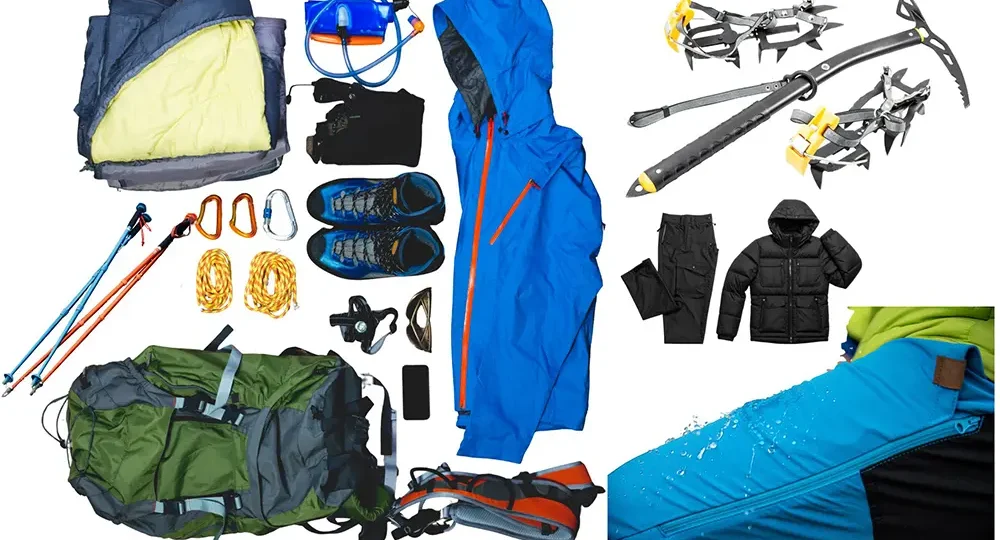
Technical climbing gear is essential for safely ascending snow slopes, glaciers, and fixed rope sections on Nepal’s trekking peaks. Always use certified, well-maintained equipment and ensure you know how to use each item before your expedition.
- Climbing Helmet: Protects your head from rockfall and falling ice.
- Climbing Harness: Required for rope travel and glacier climbing.
- Crampons: provide traction on snow- and ice-covered terrain.
- Ice Axe: Used for balance, self-arrest, and climbing steep snow slopes.
- Locking Carabiners: Securely connect ropes and climbing equipment.
- Non-Locking Carabiners: Used for general climbing and gear attachment.
- Ascender (Jumar): Helps climb fixed ropes during the summit push.
- Belay/Rappel Device: Used for controlled descents and rope management.
- Safety Sling & Cow’s Tail: provides secure attachment to fixed ropes.
- Prusik Cord Backup: safety cord for rope rescue and climbing.
Clothing
Weather in the Himalayas can change rapidly, with temperatures dropping well below freezing at higher elevations. Layering your clothing allows you to stay warm, dry, and comfortable throughout the climb.
- Moisture-Wicking Base Layers: Keep sweat away from your body.
- Fleece or Softshell Jacket: Provides warmth during cold conditions.
- Waterproof Shell Jacket: Protects against rain, snow, and strong winds.
- Waterproof Trekking Pants: Keep your legs dry and comfortable.
- Down Jacket: Essential insulation for high-altitude camps and summit day.
- Thermal Bottoms: Extra warmth during cold nights.
- Wool or Synthetic Trekking Socks Reduce blisters and keep feet warm.
- Insulated Gloves: Protect hands from freezing temperatures.
- Warm Hat & Buff Reduce heat loss and protect against cold winds.
- Sun Hat: Shields your face from intense mountain sunlight.
Footwear
Proper footwear provides stability, warmth, and protection on rocky trails, glaciers, and snow-covered slopes. Comfortable, well-fitted boots are one of the most important pieces of climbing equipment.
- Insulated Mountaineering Boots Compatible with crampons for climbing.
- Trekking Boots: Waterproof with strong ankle support.
- Gaiters: Prevent snow, mud, and rocks from entering your boots.
- Camp Shoes or Sandals: Comfortable footwear at tea houses and camps.
- Liner Socks: Help reduce friction and prevent blisters.
Camping Equipment for Peak Climbing in Nepal
Many peak climbing expeditions include overnight stays at high camps where temperatures can become extremely cold. Quality camping equipment ensures warmth, comfort, and better recovery before summit day.
- Sleeping Bag (-20°C or lower: Suitable for extreme-cold conditions.
- Sleeping Bag Liner: Adds warmth and keeps your sleeping bag clean.
- 35–45 L Daypack: Carries daily essentials during the climb.
- 70–90 L Duffel: Bag stores your main luggage carried by porters.
- Backpack Rain Cover: Protects your gear from rain and snow.
- Dry Bags: Keep clothing and electronics dry.
- Travel Pillow (Optional): Adds comfort during overnight stays.
Personal Items
Personal essentials help you stay healthy, comfortable, and prepared throughout your expedition.
- First Aid Kit Basic medicines, bandages, and blister treatment.
- Personal Medications Bring enough for the whole expedition.
- Sunscreen (SPF 50+) protects against strong UV rays.
- Lip Balm with SPF Prevents dry and cracked lips.
- Toiletries: Toothbrush, toothpaste, soap, and a quick-dry towel.
- Hand Sanitizer & Wet Wipes: Maintain personal hygiene.
- Reusable Water Bottles: Carry at least 2 liters of water.
- Water Purification Tablets or Filter: Ensure safe drinking water.
- Energy Snacks: Nuts, chocolate, or energy bars provide quick energy.
Communication and Navigation
Reliable communication and navigation equipment improve safety, especially in remote mountain environments where mobile coverage may be limited.
- Headlamp essential for early morning summit climbs.
- Power Bank Keep your devices charged.
- Charging Cable & Travel Adapter Compatible with Nepal’s Power Outlets.
- Mobile phones are useful for communication where network coverage is available.
- GPS Watch (Optional) Track altitude, distance, and route.
- Satellite Communicator (Optional) Ideal for remote expeditions.
- Trekking Map or GPS App Useful for route awareness.
Important Documents and Items
Before starting your peak climbing expedition in Nepal, ensure you have all the necessary documents and essential items. Keeping both physical and digital copies will help you avoid delays and make your journey smoother.
- Passport valid for at least six months.
- A Nepal visa is required for most international travelers.
- A peak climbing permit is mandatory for your selected climbing peak.
- National Park and Conservation Area permits are required based on your climbing area.
- Travel Insurance Must include high-altitude climbing and emergency helicopter evacuation.
- Passport-Size Photos are useful for permits and official paperwork.
- Cash (Nepalese rupees) needed for personal expenses in remote areas.
- Emergency Contact Details Keep both printed and digital copies.
- Flight Tickets & Booking Confirmations Carry printed or digital copies.
- Personal Identification Keep copies of important documents stored separately from the originals.
Equipment Rental in Nepal
If you don’t own specialized mountaineering equipment, renting gear in Nepal is a convenient and cost-effective option. Kathmandu (Thamel) is the main hub for trekking and climbing gear rentals, while a limited selection of technical equipment is also available in Chhukung for Island Peak climbers.
Common rental rates include sleeping bags (NPR 200–600 per day) and down jackets (around NPR 250 per day). Technical equipment such as crampons, climbing harnesses, helmets, ice axes, ascenders (Jumars), mountaineering boots, and gaiters can also be rented at reasonable prices, helping climbers reduce luggage and avoid the expense of purchasing equipment for a single expedition.
Conclusion
Having the right gear and equipment for peak climbing in Nepal is one of the most important factors for a safe and successful expedition. From technical climbing equipment and proper layered clothing to sturdy footwear, camping gear, and essential documents, every item plays a vital role in helping you handle the challenges of Nepal’s high-altitude environment.
Before your expedition, inspect all your equipment, test your gear, and pack only what is necessary. If you don’t own specialized climbing equipment, you can rent many technical items in Kathmandu from reputable outdoor gear shops.
By preparing thoroughly and carrying the right equipment, you’ll improve your comfort, enhance your safety, and increase your chances of reaching the summit while enjoying an unforgettable Himalayan climbing experience.